
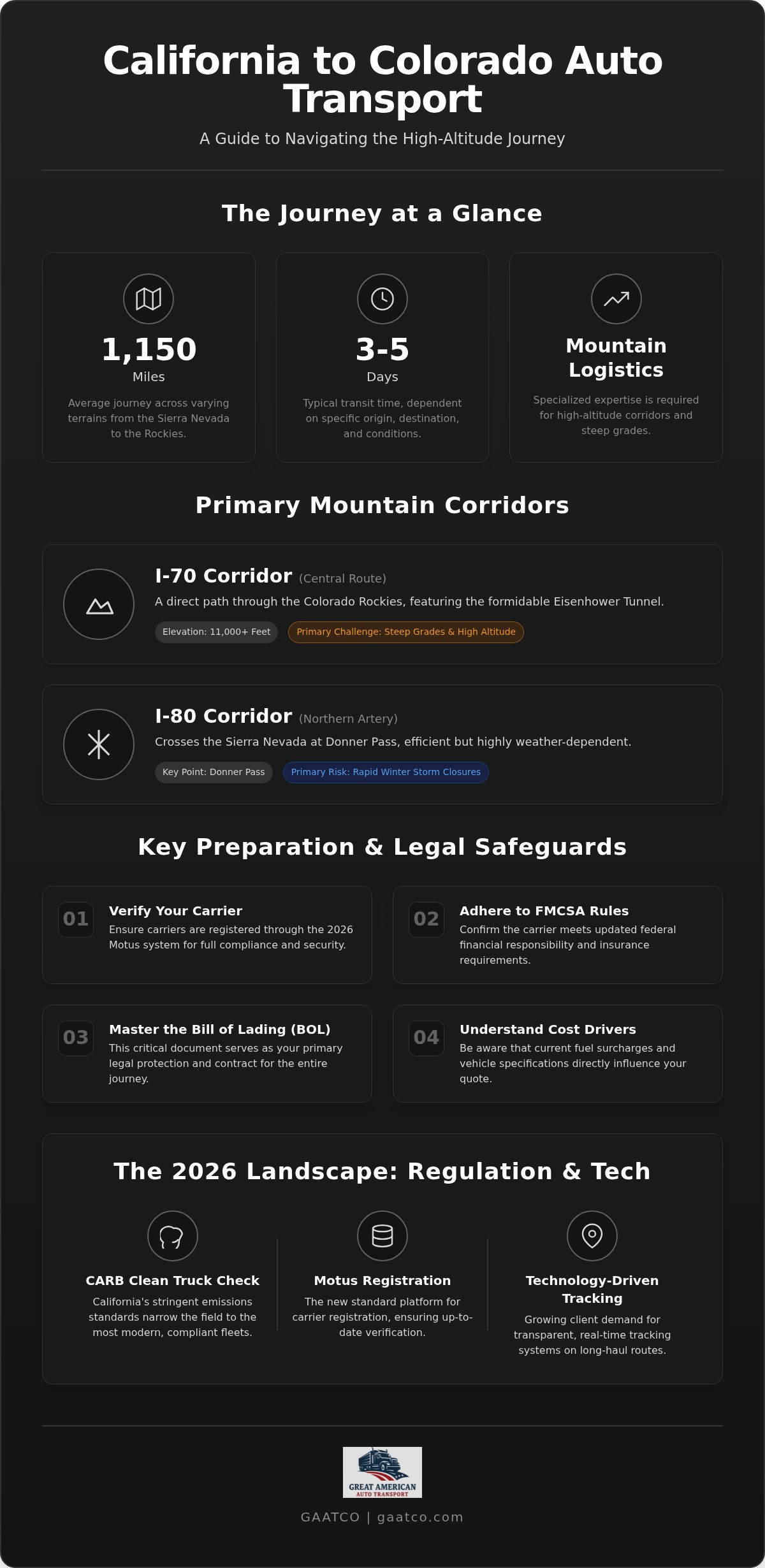
Crossing the Continental Divide is not merely a matter of mileage; it is a sophisticated logistical undertaking that demands precision and an intimate knowledge of high-altitude corridors. When arranging california to colorado auto transport, you likely recognize that moving a vehicle through the Sierra Nevada and the Rockies involves more than a standard highway haul. The steep grades and unpredictable alpine weather patterns of 2026 require a logistics partner who prioritizes safety and reliability over simple transit speed. For the discerning owner, the primary concern is the absolute preservation of the vehicle throughout its 1,150 mile journey across varying terrains.
This guide provides the expert insights necessary to navigate these complexities with absolute confidence. We address the intricacies of mountain logistics and the latest 2026 industry standards to ensure your vehicle arrives at its Denver or Colorado Springs destination in pristine condition. By understanding the nuances of professional handling and transparent service options, you can eliminate the anxiety often associated with high-stakes relocation. We will examine the current regulatory landscape, including the transition to the Motus registration platform, and provide a clear roadmap for a delivery that aligns with your specific requirements and peace of mind.
Key Takeaways
- Identify the strategic differences between the I-70 and I-80 corridors, focusing on how seasonal conditions at the Eisenhower Tunnel and Donner Pass dictate transit safety.
- Ensure a secure california to colorado auto transport experience by verifying carriers through the 2026 Motus registration system and adhering to updated FMCSA financial responsibility rules.
- Master the essential preparation steps for high-altitude transit, including the critical role of the Bill of Lading as your primary legal protection during the 1,150-mile journey.
- Navigate 2026 cost drivers by understanding how current fuel surcharges and vehicle specifications influence professional logistics quotes for mountain-bound shipments.
- Leverage the expertise of a seasoned logistics partner to manage door-to-door delivery, providing a discreet and dependable bridge between complex operational realities and your relocation needs.
Navigating the California to Colorado Auto Transport Corridor
The transit corridor connecting the West Coast to the Rocky Mountains has become a vital artery for the American economy. Specifically, california to colorado auto transport serves as a critical link for professionals relocating within the technology sector and those seeking the seasonal lifestyle of the Mountain West. This 800 to 1,200-mile journey presents unique challenges that transcend simple point-to-point driving. The vast distance requires meticulous coordination to ensure that vehicles are handled with the care required for such a significant transit. The typical transit time for this route ranges from 3 to 5 days, depending on the specific origin and destination selected.
To better understand the nuances of this process, watch this helpful overview of regional vehicle transport:
Central to this journey is the concept of Mountain Logistics. This term defines a specialized approach to transport where elevation changes, steep grades, and unpredictable weather dictate every operational decision. Unlike flatland hauling, crossing the Continental Divide requires equipment and drivers capable of managing high-altitude stressors while maintaining a steady delivery schedule.
Why This Route Requires Specialized Expertise
Moving a vehicle from the coastal sea level of California to the high-altitude passes of Colorado is a physical transformation for the transport process. Carriers must navigate the transition from mild Pacific climates to the thin air and rigorous grades found along Interstate 70 in Colorado. Additionally, California's stringent emissions standards, such as the CARB Clean Truck Check, influence which carriers are eligible to operate within the state. This regulation effectively narrows the field to only the most modern and compliant fleets. For busy professionals in sprawling metropolitan hubs like San Diego or Denver, utilizing door-to-door auto shipping is not just a convenience; it is a necessity that ensures the vehicle is handled professionally from the moment it leaves the driveway until it reaches its final destination.
The 2026 Outlook for Western Vehicle Relocation
In 2026, the demand for reliable western relocation services continues to grow as corporate decentralization remains prominent. This increased volume has led to a greater emphasis on transparent, technology-driven tracking systems that allow clients to monitor their vehicle's progress across the 1,000-mile expanse. Clients now expect a level of visibility that matches the high-stakes nature of their move. GAATCO serves as a discreet and dependable partner in this evolving landscape, leveraging two decades of expertise to bridge the gap between complex operational requirements and the client's need for a seamless experience. Our team understands that in a market defined by shifting trends, consistency and safety remain the most valuable commodities.
Understanding Mountain Logistics: I-70 vs. I-80
Selecting the optimal path for california to colorado auto transport depends heavily on the time of year and the specific vehicle profile. Interstate 80 serves as the primary northern artery, crossing the Sierra Nevada at Donner Pass. While efficient, this route is susceptible to rapid closures during Pacific storm cycles. Conversely, Interstate 70 offers a more central path through the Colorado Rockies, featuring the formidable Eisenhower Tunnel. This tunnel sits at an elevation over 11,000 feet, representing one of the highest points on the U.S. Interstate system. Professional dispatchers maintain constant communication with carriers to monitor these high-altitude weather patterns. We ensure that every driver in our network possesses the specific expertise required for high-grade mountain driving, where brake management and gear selection are non-negotiable skills. If you're planning a relocation, you can request a customized logistics plan to see how we manage these variables.
Winter Transit and Seasonal Considerations
The window for severe winter weather in the high country typically spans from October through April. During these months, logistics become significantly more complex due to mandatory chain laws and frequent pass closures. Carriers must be prepared for sudden shifts in visibility and road traction. To protect high-value assets from the corrosive road salt and abrasive sand used on mountain passes, we often recommend enclosed car transport. This service provides a physical barrier against the harsh elements of the Continental Divide. While winter conditions can occasionally cause minor transit delays, prioritizing safety over speed is the hallmark of a professional logistics partner.
The Impact of Elevation on Vehicle Preparation
Preparing a vehicle for a 1,000-mile journey across varying altitudes requires more than just a standard check-up. Contrary to common myths, tire pressure won't fluctuate dangerously during transit, but it's wise to ensure tires are at the manufacturer's recommended levels before loading. Battery health is a more critical concern, as the cold temperatures found at high elevations can drain a weak battery quickly. We suggest checking all fluid levels, particularly coolant, as engines work harder in Colorado's thin, dry air. Before finalizing your booking, reviewing the FMCSA consumer advisory can help you understand your rights and the carrier's responsibilities. A meticulous pre-transport inspection is the foundation of a successful mountain haul. This documentation protects your investment and ensures total transparency throughout the journey.
Calculating the Cost to Ship a Car from CA to CO
Determining the financial investment for california to colorado auto transport requires an appreciation for the logistics involved in a 1,150-mile mountain transit. Cost is primarily driven by the total distance, the physical dimensions of the vehicle, and the selected carrier method. In 2026, professional quotes must also account for fluctuating fuel surcharges, which are integrated into a transparent pricing structure to avoid the "sticker shock" of unexpected fees. We believe in providing a comprehensive figure that reflects the reality of the journey, including the specialized equipment needed for high-altitude hauls. Unlike discount brokers who might hide "mountain delivery" surcharges until the final invoice, we prioritize clarity from the initial consultation.
The debate between price and value is particularly relevant for owners of high-end or classic vehicles. While the lowest bid might seem attractive, it often indicates a carrier that lacks the insurance or specialized experience required for the Rockies. Before committing to a service based solely on cost, consulting the FMCSA consumer advisory is a prudent step to ensure your chosen partner meets federal safety and registration standards. Selecting a seasoned logistics partner is an investment in the safe, damage-free arrival of your property.
Open vs. Enclosed Carrier Pricing
Open car transport remains the standard for everyday sedans and SUVs, offering a balance of efficiency and reliability. It's the most common method for a reason, providing professional handling at a more accessible price point. However, for vehicles that require a higher level of discretion or protection from the elements, enclosed transport is the superior choice. This premium service justifies its higher cost through enhanced security, protection from road debris, and significantly higher insurance coverage limits. It's the preferred option for those who view their vehicle as an asset that demands an extra layer of care during the crossing of the Continental Divide.
Variables That Influence Your 2026 Quote
Several specific factors can adjust the final cost of your shipment. Vehicle weight is a primary consideration; larger SUVs or trucks require more fuel and space on the trailer. Aftermarket modifications, such as roof racks or oversized tires, can also impact the quote if they change the vehicle's footprint. If your vehicle is not in running condition, an "inoperable vehicle transport" surcharge will apply, as specialized winching equipment is necessary for loading and unloading. To receive a precise breakdown tailored to your specific vehicle and timeline, we invite you to request a customized quote. This ensures your logistics plan is as unique as the vehicle we are handling.
Professional Preparation for Your Vehicle Shipment
Successful california to colorado auto transport begins long before the carrier arrives at your driveway. A 1,000-mile journey through the varying climates of the West requires a level of preparation that ensures both the safety of the vehicle and the efficiency of the transit. We recommend that every client treats the preparation phase with the same level of precision that we apply to the logistics of the move. By following a few disciplined steps, you provide the necessary foundation for a damage-free delivery to your new residence in the Mountain West.
The first requirement is a thorough exterior cleaning. While this may seem aesthetic, it's fundamentally functional. A clean car allows for a precise inspection of the vehicle's surface, ensuring that any pre-existing conditions are accurately documented. Additionally, professional standards for 2026 dictate that vehicles involved in california to colorado auto transport should be loaded with no more than a 1/4 tank of fuel. This reduces the overall weight on the trailer and complies with safety regulations designed to mitigate risk during high-altitude crossings. As you prepare your vehicle, review our professional transport services to ensure every detail of your relocation is managed with the highest level of care.
The Inspection and Bill of Lading Process
The Bill of Lading serves as your primary legal document and a definitive record of your vehicle's condition. When the driver arrives, you'll conduct a joint inspection. It's a collaborative process where every detail is noted on the digital or paper form. We encourage our clients to take high-resolution, time-stamped photos of the vehicle from multiple angles at the time of pickup. These images complement the written report and provide an undeniable visual record. Once the inspection is complete, you'll review and sign the Bill of Lading; your signature confirms the accuracy of the report and authorizes the commencement of the journey.
Personal Items and Security Precautions
Maintaining the security of your vehicle involves clearing the interior of all personal belongings. Industry standards are strict regarding this; carriers are licensed to transport vehicles, not household goods. Items left inside aren't covered by the carrier's insurance and can shift during transit, potentially causing interior damage. Owners should also disable toll tags, such as FasTrak or E-ZPass, to avoid erroneous charges as the vehicle passes through automated gantry systems. Finally, ensure that car alarms are deactivated and any non-permanent modifications, such as loose exterior racks or custom spoilers, are removed or secured to prevent movement during the climb over the Continental Divide.
The GAATCO Advantage: Elite Service for the Mountain West
GAATCO (Great American Auto Transport Company) represents the gold standard for california to colorado auto transport. With over 20 years of industry experience, we've refined our operations to handle the most complex logistical hurdles with quiet confidence. Our team understands that for the corporate executive or high-value vehicle collector, the transition across the Rockies is more than a simple move. It's a high-stakes transfer of property that requires a seasoned hand. By providing a dedicated point of contact for every shipment, we eliminate the ambiguity often found in the broader transport market. This ensures that every client feels supported from the initial inquiry to the final delivery in a Denver or Colorado Springs residence.
Why Discretion and Reliability Matter
We treat every relocation as a specialized project. This approach is particularly vital for high-stakes corporate and private moves where privacy and precision are non-negotiable pillars. Our status as a seasoned expert allows us to maintain a rigorously vetted, licensed, and insured carrier network. We don't just assign a trailer; we select a logistics solution that fits the specific requirements of the mountain corridor. This level of scrutiny provides the peace of mind that affluent audiences demand when shipping their assets through the challenging terrain between San Francisco and Denver. Our commitment to safety is a core operational value that we never compromise, regardless of the seasonal challenges presented by the Continental Divide.
Getting Started with Your Relocation
Moving from the planning phase to active logistics should be a seamless experience. We've designed our systems to act as a bridge between your specific needs and the operational realities of california to colorado auto transport. The GAATCO request process is engineered for efficiency, allowing you to secure a customized logistics plan without unnecessary delays or complex paperwork. As your trusted advisor, we handle the intricacies of mountain routing, seasonal timing, and door-to-door coordination. This allows you to focus on the broader aspects of your relocation while we manage the specialized transport of your vehicle with the meticulous attention to detail it deserves. Our human-centric service operates behind a sophisticated infrastructure to deliver outcomes that align with your expectations for quality and exclusivity.
Secure Your High-Altitude Relocation Today
Successful vehicle relocation across the Rockies is a matter of combining technical precision with geographic expertise. You now understand the critical differences between the I-70 and I-80 corridors, the importance of a meticulous Bill of Lading, and the value of preparing your vehicle for the thin air of the Mountain West. Managing california to colorado auto transport in 2026 requires more than just a truck; it demands a partner who anticipates mountain weather shifts and prioritizes your property's safety.
GAATCO offers a bridge between these complex logistics and your peace of mind. With over 20 years of specialized expertise and a fully licensed and insured carrier network, we provide the elite, A+ rated door-to-door service that discerning owners expect. Our team is ready to handle the details so you can focus on your transition with total confidence.
Request a Professional Auto Transport Quote from GAATCO and experience a relocation defined by reliability and understated excellence. Your journey to the Continental Divide deserves nothing less than professional handling.
Frequently Asked Questions
How much does it cost to ship a car from California to Colorado in 2026?
Costs for california to colorado auto transport are determined by several factors, including the vehicle's dimensions, the chosen carrier type, and seasonal demand. In 2026, fuel surcharges are integrated into a comprehensive quote to ensure transparency. While open carriers offer efficiency for standard sedans, enclosed options provide a premium level of protection. Every quote is customized to reflect the specific logistics of crossing the Continental Divide without hidden mountain delivery fees.
How long does it take to transport a vehicle from CA to CO?
The transit time for a vehicle moving from California to Colorado typically ranges from 3 to 5 days. This window accounts for the 1,150-mile journey and the necessary navigation of high-altitude passes like the Eisenhower Tunnel. Specific timelines depend on the origin and destination hubs, such as San Francisco or Denver. Professional dispatchers monitor weather patterns and road closures to ensure that delivery schedules remain reliable despite the complexities of mountain logistics.
Is enclosed transport necessary for the California-Colorado route?
While open transport is suitable for most vehicles, enclosed car transport is highly recommended for high-value, classic, or luxury models. This is especially true during the winter months from October to April, when road salt and abrasive sand are common on mountain routes. Enclosed trailers provide a weather-proof environment and higher insurance coverage limits. It's a prudent investment for owners who prioritize maximum protection against road debris and harsh alpine conditions.
Can I ship personal items inside my car when moving to Colorado?
Industry regulations and insurance policies strictly prohibit the shipment of personal items inside the vehicle. Auto carriers are licensed for vehicle transport, not as household goods movers. Items left inside can shift during transit, potentially causing damage to the interior that isn't covered by the carrier's insurance. To ensure a safe and compliant journey, we require that the vehicle's cabin and trunk remain empty of all personal belongings before the driver arrives for pickup.
Does GAATCO offer door-to-door delivery in Denver and San Diego?
GAATCO provides professional door-to-door auto shipping throughout the entire region, including major metropolitan areas like Denver, San Diego, and San Francisco. This service eliminates the need for you to visit a terminal, as our carriers pick up and deliver the vehicle as close to your residence as local laws and physical access allow. It's a discreet and dependable solution designed to save time for busy professionals managing a high-stakes relocation.
What happens if my vehicle is damaged during transport through the mountains?
In the rare event of damage, the process is governed by the Bill of Lading and our comprehensive insurance coverage. Every carrier in our network is fully licensed and insured to protect your asset. You'll conduct a final inspection upon delivery and note any discrepancies on the Bill of Lading. This document serves as the primary legal record for initiating an insurance claim. Our dedicated team provides guidance throughout the resolution process to ensure a professional outcome.
Can you ship an inoperable vehicle from California to Colorado?
We offer specialized inoperable vehicle transport for cars that cannot move under their own power. This service requires trailers equipped with winches or other loading machinery to safely secure the vehicle without causing further mechanical strain. Shipping a non-running car from California to Colorado involves a specific surcharge to account for the additional labor and equipment required. It's essential to disclose the vehicle's condition during the quoting process to ensure the correct carrier is assigned.
How do I track my vehicle while it is in transit to Colorado?
We prioritize transparent communication by providing a dedicated point of contact throughout the shipping process. You'll receive updates regarding the vehicle's progress as it navigates the 1,000-mile corridor. Our 2026 logistics framework utilizes technology-driven tracking to offer visibility into transit milestones. This approach ensures you're never left in doubt about the status of your property. Our team acts as a bridge between complex operational realities and your need for consistent, reliable information.


