

What if the most critical day of your relocation isn't the move itself, but the 28th day before you depart? Many professionals assume a few days of lead time is sufficient, yet establishing a reliable timeline for shipping a car during a cross-country move in 2026 requires a much more disciplined approach. With fuel surcharges reaching 14.00% this May according to Yamato Transport USA and new FMCSA enforcement protocols active as of February 7, 2026, the logistics of vehicle transport demand seasoned expertise and careful planning.
It's natural to worry about your vehicle being delayed while you begin a new chapter in a different city. You require a transition that's both predictable and secure. This guide promises to help you master these complexities by providing a definitive schedule for booking, vehicle pickup, and final delivery. We'll explore the strategic three-phase sequence designed to ensure your vehicle arrives precisely when you need it, allowing you to focus on your move with complete confidence.
Key Takeaways
- Secure the most reputable carriers and advantageous rates by initiating your booking at least 28 days before your preferred departure date.
- It’s essential to distinguish between your "Available Date" and the standard pickup window to maintain precise control over your relocation logistics.
- Master the timeline for shipping a car during a cross-country move by anticipating transit durations that align with current 2026 mileage standards.
- Identify how seasonal migrations and safety-first weather protocols can influence delivery speed, allowing you to build necessary buffers into your itinerary.
- Discover how GAATCO’s bespoke logistics and two decades of expertise provide the precision required for high-stakes vehicle transport.
The 28-Day Countdown: When to Book Your Cross-Country Move
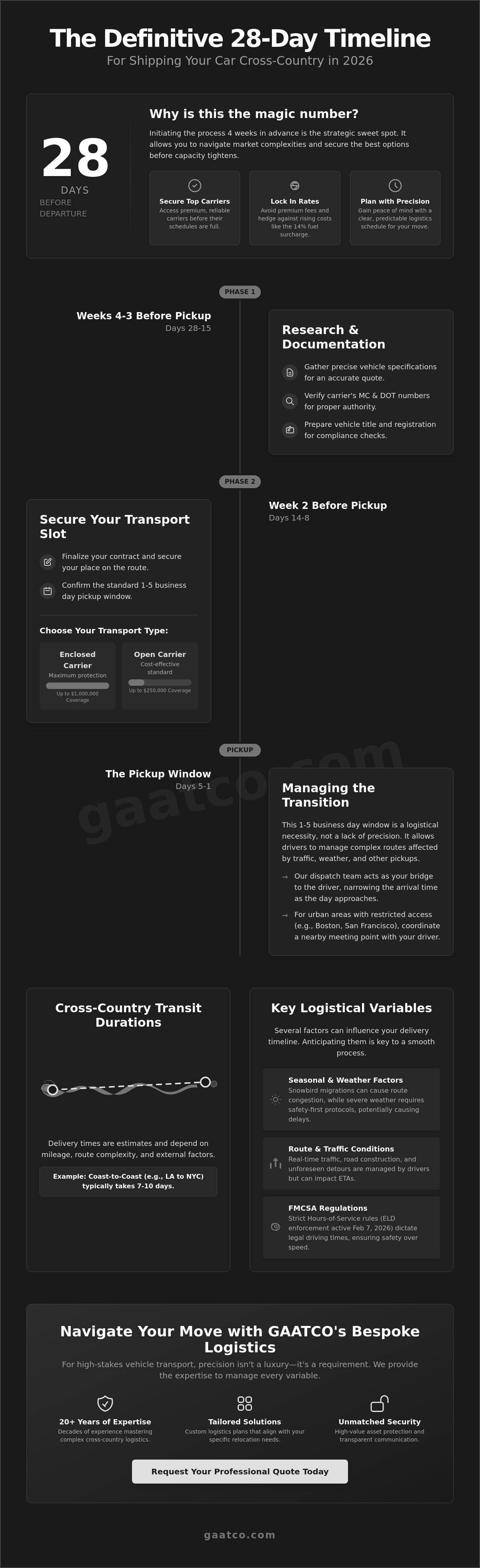
Establishing a successful timeline for shipping a car during a cross-country move begins exactly four weeks before your intended departure. This 28-day window isn't arbitrary; it represents the precise lead time required to secure premium carriers before their routes reach capacity. By May 2026, high diesel prices and a 14.00% fuel surcharge from major carriers have tightened the market. Booking 30 days in advance allows you to lock in competitive rates and avoid the premium fees often associated with last-minute scheduling.
Understanding the nuances of logistics is essential for a seamless transition. To better understand this concept, watch this helpful video:
A common point of confusion in the industry involves the distinction between the "Available Date" and the "Pickup Date." Your available date is the first day the vehicle is ready for release; the pickup date is the specific moment the carrier arrives. In 2026, stricter FMCSA ELD enforcement, effective February 7, 2026, means drivers must strictly adhere to hours-of-service regulations. This makes understanding the role of an auto transport broker vital, as they coordinate these specific windows to prevent your vehicle from being "stuck" while you are already at your new destination.
Phase 1: Research and Documentation (Weeks 4-3)
During the initial fortnight of your countdown, focus on gathering documentation. You'll need to provide precise vehicle specifications when requesting a professional quote. This period is also when you should verify a carrier's MC and DOT numbers to ensure they possess the proper long-haul authority. Having your vehicle's title and registration ready is essential, as interstate checkpoints have become more rigorous following the FMCSA's 2026 final rule on non-domiciled CDLs. This early preparation ensures a compliant and steady timeline for shipping a car during a cross-country move.
Phase 2: Securing Your Transport Slot (Week 2)
Two weeks before departure, you should finalize your contract and secure your slot. Be wary of any provider offering "guaranteed pickup dates" at this stage. In professional logistics, such promises are often a red flag because they ignore the variables of transcontinental travel. Instead, look for a defined pickup window of one to five business days. This is the time to confirm whether you require specific transport services, such as open or enclosed transport. Keep in mind that enclosed carriers offer higher liability coverage, often ranging from $250,000 to $1,000,000 for high-value assets.
The Pickup Window: Managing the Transition Period
Once you've secured your booking, the focus shifts to the pickup window. This is typically a one to five business day period during which the carrier will arrive at your location. Successfully navigating the timeline for shipping a car during a cross-country move requires understanding that this window isn't a lack of precision. It's a logistical necessity. Long-haul drivers manage complex schedules that fluctuate based on traffic, weather, and the loading times of other vehicles on their route. Our dispatch team works as a bridge between you and the driver to narrow this arrival time as the date approaches.
According to data on Cross-Country Transit Durations, the complexity of the route often dictates the precision of the pickup window. This is particularly true for door-to-door shipping in dense urban environments. If you're moving from a city with restrictive residential zones, such as the narrow historic streets of Boston or the steep grades of San Francisco, an 80-foot carrier may be legally prohibited from entering your neighborhood. In these instances, you'll coordinate with the driver to meet at a nearby spacious parking lot. Those who require a tailored transport quote often find that early dispatch coordination is the key to a stress-free departure.
The Bill of Lading and Initial Inspection
The moment the carrier arrives, the formal inspection process begins. You'll conduct a meticulous walk-around with the driver to document the vehicle's current state on the Bill of Lading (BOL). This document serves as your official legal receipt. We recommend taking high-resolution photos of all angles, including the odometer and interior, before the car is loaded. For high-value assets in enclosed transport, where liability coverage can reach $1,000,000, this documentation is a non-negotiable pillar of safety. Once you sign the BOL, the carrier assumes professional responsibility for your vehicle.
Coordinating with the Driver
Clear communication is the hallmark of a premium transport experience. You'll typically receive a 24-hour notice before the driver's arrival, followed by a final confirmation call two hours prior. If your schedule requires you to depart before the carrier arrives, you must arrange for a trusted representative to be present for the inspection. It's also vital to disclose if your vehicle is inoperable. As of May 2026, shipping a non-running vehicle typically incurs an additional fee between $150 and $300. This cost covers the specialized winching equipment required to safely load the car without engine power.
Cross-Country Transit Durations: Mileage vs. Realistic Delivery
While the booking phase sets the foundation, the transit phase is where logistical precision is truly tested. Estimating the timeline for shipping a car during a cross-country move requires a granular look at mileage tiers rather than general averages. It's a mistake to assume that a 2,800-mile journey will progress at the same daily rate as a 500-mile regional transport. Long-haul routes require significant buffer time for fuel stops, mandatory rest periods, and potential traffic congestion in major metropolitan corridors.
As of May 2026, the industry standard for transit durations is categorized by three primary mileage tiers:
- Mileage Tier 1 (1,000–1,500 miles): These routes, such as Chicago to Houston, typically require 3 to 5 days in transit.
- Mileage Tier 2 (1,500–2,500 miles): Journeys spanning from the Midwest to the West Coast generally take 5 to 7 days.
- Mileage Tier 3 (2,500+ miles): True coast-to-coast relocations, such as New York to Los Angeles, require a window of 7 to 10 days.
ELD Regulations and Driver Safety
The implementation of stricter FMCSA enforcement on February 7, 2026, has fundamentally changed how we calculate delivery windows. Drivers must utilize Electronic Logging Devices (ELDs) that are strictly monitored. If a carrier uses a revoked ELD, enforcement officers now have the authority to place the vehicle out of service immediately. These regulations prevent the "express" cross-country trips that once relied on driver fatigue. We prioritize a well-rested driver because it's a non-negotiable pillar of your vehicle's security. A driver who adheres to legal rest requirements is significantly less likely to experience transit incidents, ensuring your timeline for shipping a car during a cross-country move remains predictable and safe.
Route Density and Hub Logistics
Route density plays a vital role in transit speed. Shipping between high-volume logistics hubs like Dallas, Atlanta, or Charlotte often results in a faster timeline because carriers frequent these routes daily. Conversely, remote or rural delivery locations present a "Last Mile" challenge. When Navigating Your Move, you'll find that terminal-to-terminal shipping is often slower than door-to-door auto shipping. Terminals require vehicles to wait until a full load is assembled for the next leg of the journey, whereas door-to-door services maintain a continuous path toward your destination. This direct approach minimizes handling and reduces the risk of hidden delays in the 2026 transport landscape.
Variables That Can Accelerate or Delay Your Delivery
Even with a meticulously planned 28-day lead time, external variables can shift your delivery window. In 2026, the "Snowbird" effect remains a dominant force in the industry. From October through December, routes originating in hubs like New York or Seattle and heading toward warmer climates like Florida or Arizona become heavily congested. This seasonal surge often leads to longer pickup windows as carriers prioritize these high-density North-South corridors. Successfully managing the timeline for shipping a car during a cross-country move requires acknowledging that these regional demand spikes can limit carrier availability on short notice.
Equipment maintenance is another factor that professional logistics teams monitor closely. A standard car carrier undergoes immense mechanical stress on a 3,000-mile journey. With diesel prices exceeding $5 per gallon in May 2026, many independent operators face increased pressure, yet premium carriers refuse to compromise on safety protocols. When comparing transport methods, it's helpful to note that enclosed car transport generally costs about 50% more than open trailer transport. While enclosed shipping offers superior protection from road debris, it may occasionally require a slightly longer booking lead time because there are fewer specialized trailers in the national network compared to open carriers.
Seasonal and Weather Considerations
Winter transit across the I-80 or I-90 corridors involves navigating unpredictable storm cycles that can halt transport for 48 to 72 hours. During these events, professional carriers prioritize safety over speed to protect your asset. In the summer months, extreme heat in southern hubs like Houston can impact tire safety and driver endurance, leading to adjusted schedules to avoid the hottest parts of the day. Planning your move during the peak relocation months of May through August is also a factor, as increased demand can raise costs by $200 to $300 per trip according to ConsumerAffairs data from March 2026.
Expedited Shipping: When You Can't Wait
If your schedule is inflexible, expedited shipping serves as a premium solution. This service utilizes a surcharge to prioritize your vehicle within the carrier network, often narrowing the pickup window to a specific 24-hour or 48-hour period. It's a bespoke option for those who cannot risk their vehicle being in transit during the first week of a new professional engagement. While the cost is higher, the trade-off is a significantly more predictable timeline for shipping a car during a cross-country move. For a precise assessment of how these variables might affect your specific route, you can request a professional quote to receive a tailored logistical plan.
Navigating Your Move with GAATCO’s Bespoke Logistics
Mastering the timeline for shipping a car during a cross-country move requires more than just a software algorithm; it demands the intuition that only comes from two decades of specialized service. While digital brokers often utilize automated systems that over-promise on delivery dates, we prioritize transparent, realistic scheduling. Our approach acknowledges the current 2026 logistical landscape, where diesel prices and stricter FMCSA enforcement of ELD regulations require a more sophisticated forecasting model. By leveraging 20 years of historical data and real-time network monitoring, we provide a schedule you can actually rely on as you transition to your new home.
Communication is the cornerstone of our service from Seattle to Miami. You won't be left wondering where your asset is during its 2,500-mile journey. Our protocol ensures you receive regular updates, bridging the gap between the driver's seat and your doorstep. Whether you choose Open vs. Enclosed Transport, our team coordinates every detail to ensure the vehicle's arrival aligns with your relocation itinerary. We treat every vehicle with the same level of seriousness required for high-stakes aviation logistics, ensuring a seamless experience that respects your time and your investment.
The GAATCO Difference in Cross-Country Shipping
Our dedicated team of professionals manages the complexities of interstate logistics so you don't have to. We maintain a robust network of vetted, licensed carriers across all 16 major US hubs, ensuring consistent coverage even during peak seasonal surges. For owners of luxury or classic vehicles, our enclosed fleet provides elite handling and enhanced security. This comprehensive network allows us to maintain a steady timeline for shipping a car during a cross-country move, even when external variables like the 2026 fuel surcharges create volatility in the broader market.
Finalizing Your Relocation Plan
A successful move begins with a professional consultation. This initial step allows us to understand your specific requirements, such as door-to-door needs in restricted urban zones or the transport of inoperable vehicles. You can request a professional quote today to receive a comprehensive, no-obligation assessment of your transport needs. Our experts are ready to provide the clarity and precision your relocation deserves. Ultimately, GAATCO bridges the gap between complex logistics and your peace of mind.
Securing Your Seamless Transition
Establishing a predictable timeline for shipping a car during a cross-country move is the difference between a stressful relocation and a seamless arrival. By adhering to the 28-day booking rule and accounting for 2026 mileage tiers, you ensure your vehicle doesn't become a source of delay during your first week in a new city. With fuel surcharges reaching 14.00% this May and stricter FMCSA enforcement active as of February 7, 2026, professional logistics management has never been more critical for the modern professional.
GAATCO brings over 20 years of specialized logistics expertise to every transport. We maintain a licensed and insured carrier network that prioritizes safety and precision over empty promises. Our dedicated door-to-door service across the United States ensures that your asset is handled with the same care as a private charter. You deserve a partner who understands the nuances of long-haul transit and the absolute necessity of a strict schedule.
Take the first step toward a coordinated move today. Request a Bespoke Auto Transport Quote from GAATCO and allow our team to manage the complexities of the road on your behalf. We look forward to facilitating your next successful journey with the calm confidence and reliability you require.
Frequently Asked Questions
How far in advance should I book car shipping for a cross-country move?
You should ideally initiate your booking three to six months in advance to secure the most favorable pricing and preferred dates. However, a 28-day lead time is the professional standard for ensuring carrier availability within your specific moving window. This timeframe allows our logistics team to vet licensed carriers and navigate the high demand seen in early 2026, where carrier capacity is often reached weeks ahead of schedule.
Can I get a guaranteed delivery date for my vehicle?
Guaranteed delivery dates are generally not feasible in professional auto transport due to unpredictable variables like weather and traffic. Instead, we provide a realistic delivery window based on current mileage tiers and FMCSA hours-of-service regulations. This approach ensures your vehicle's safety is never compromised by a driver attempting to meet an impossible deadline. We prioritize transparent scheduling that accounts for the 2026 regulatory environment and equipment safety protocols.
How long does it realistically take to ship a car from New York to Los Angeles?
A coast-to-coast journey from New York to Los Angeles typically requires 7 to 10 days in transit. This timeline for shipping a car during a cross-country move accounts for the approximately 2,800 miles traveled and mandatory rest periods for the driver. Since the FMCSA ELD enforcement began on February 7, 2026, these transit times have become more standardized to ensure drivers remain within legal operating hours for maximum safety.
Does the type of trailer (Open vs. Enclosed) change the delivery timeline?
Enclosed transport may require a longer booking lead time because these specialized trailers represent a smaller percentage of the national fleet. However, once the vehicle is in transit, the delivery timeline remains consistent with open carrier standards. Choosing enclosed transport provides a premium level of protection and higher insurance coverage, often ranging from $250,000 to $1,000,000, making it the preferred choice for high-value or classic assets.
What happens if my car is delayed during the move?
If a delay occurs due to adverse weather or mechanical maintenance, our dispatch team will provide immediate notification and an updated arrival window. Professional carriers prioritize safety over speed; therefore, a pause during a severe storm cycle is a sign of responsible logistics. We maintain a continuous communication protocol to ensure you are never left wondering about your vehicle's status while you manage other aspects of your relocation.
Can I track my car's progress while it is being shipped across the country?
You can track your vehicle's progress through direct coordination with the driver or our dedicated dispatch team. While some carriers offer GPS tracking, the most reliable information comes from the 24-hour and 2-hour arrival notices provided by the driver. This personalized communication ensures that you receive real-time updates regarding the vehicle's position and any logistical adjustments required by current road conditions or 2026 traffic patterns.
Is it faster to ship a car terminal-to-terminal or door-to-door?
Door-to-door auto shipping is significantly faster than terminal-to-terminal options because it eliminates the waiting periods at consolidation hubs. In a terminal-to-terminal scenario, your car might wait for several days until a carrier has a full load for that specific route. Door-to-door service provides a direct path from your origin to your destination, reducing handling and ensuring a more predictable timeline for shipping a car during a cross-country move.
How do holidays and weekends affect the car shipping timeline?
Weekends typically do not delay transit because long-haul drivers operate on a continuous schedule governed by ELD hours rather than traditional business days. However, major holidays can significantly impact your timeline by increasing road congestion and reducing available carrier slots. Planning your move to avoid peak holiday periods ensures a more seamless transition and helps you avoid the seasonal surcharges that often accompany high-demand travel dates in 2026.


