A standard tow truck might seem like the logical solution for a vehicle that refuses to start, yet for sophisticated long-distance logistics, this choice often introduces unnecessary risk. Most owners feel a legitimate concern regarding the mechanical strain placed on an inoperable car during the loading process. You likely worry about the integrity of the winching operation or the transparency of the final invoice. Identifying the best way to transport a non-running vehicle isn't merely a matter of finding a trailer. It's about securing a partner who treats your asset with meticulous care and technical precision.
We promise to provide a clear roadmap for moving your inoperable vehicle safely across the country while maintaining the highest professional standards. This guide examines the essential specialized equipment required for a damage-free arrival and explains how to navigate the logistical nuances of inoperable vehicle transport. You will gain the clarity needed to manage your transport requirements with the same level of sophistication you apply to every other aspect of your professional life. We'll explore the technical requirements of winching and the specific carrier standards that ensure a seamless, elite delivery experience.
Key Takeaways
- Understand the critical distinction between minor engine issues and total mechanical immobility by assessing the Roll, Steer, and Brake status of your vehicle.
- Determine if winched open-air transport or hydraulic liftgate enclosed options represent the best way to transport a non-running vehicle based on its specific condition and value.
- Gain clarity on the logistics of the inoperable surcharge and why specialized equipment necessitates additional loading time for specialized assets.
- Learn how to prepare an inoperable vehicle for a damage-free delivery by securing loose components and ensuring wheels are ready for the winching process.
- Discover how the GAATCO Standard leverages two decades of expertise to provide bespoke logistics solutions for high-stakes vehicle relocation.
Defining Inoperable: Assessing Your Vehicle’s Condition for Transport
In the specialized world of automotive logistics, the term "inoperable" covers a broad spectrum of mechanical states. A vehicle that merely fails to start due to a depleted battery requires vastly different handling than one with a seized engine or a compromised chassis. Determining the best way to transport a non-running vehicle begins with an exacting assessment of its current physical capabilities. While standard towing techniques might suffice for local recovery, professional long-haul transport demands a more nuanced understanding of the vehicle's condition to ensure safety and operational efficiency. Accurate reporting is not just a clerical detail; it's a fundamental pillar of a successful transport operation.
To better understand the practical challenges of loading an inoperable vehicle, watch this helpful video:
The Roll, Steer, and Brake (RSB) Standard
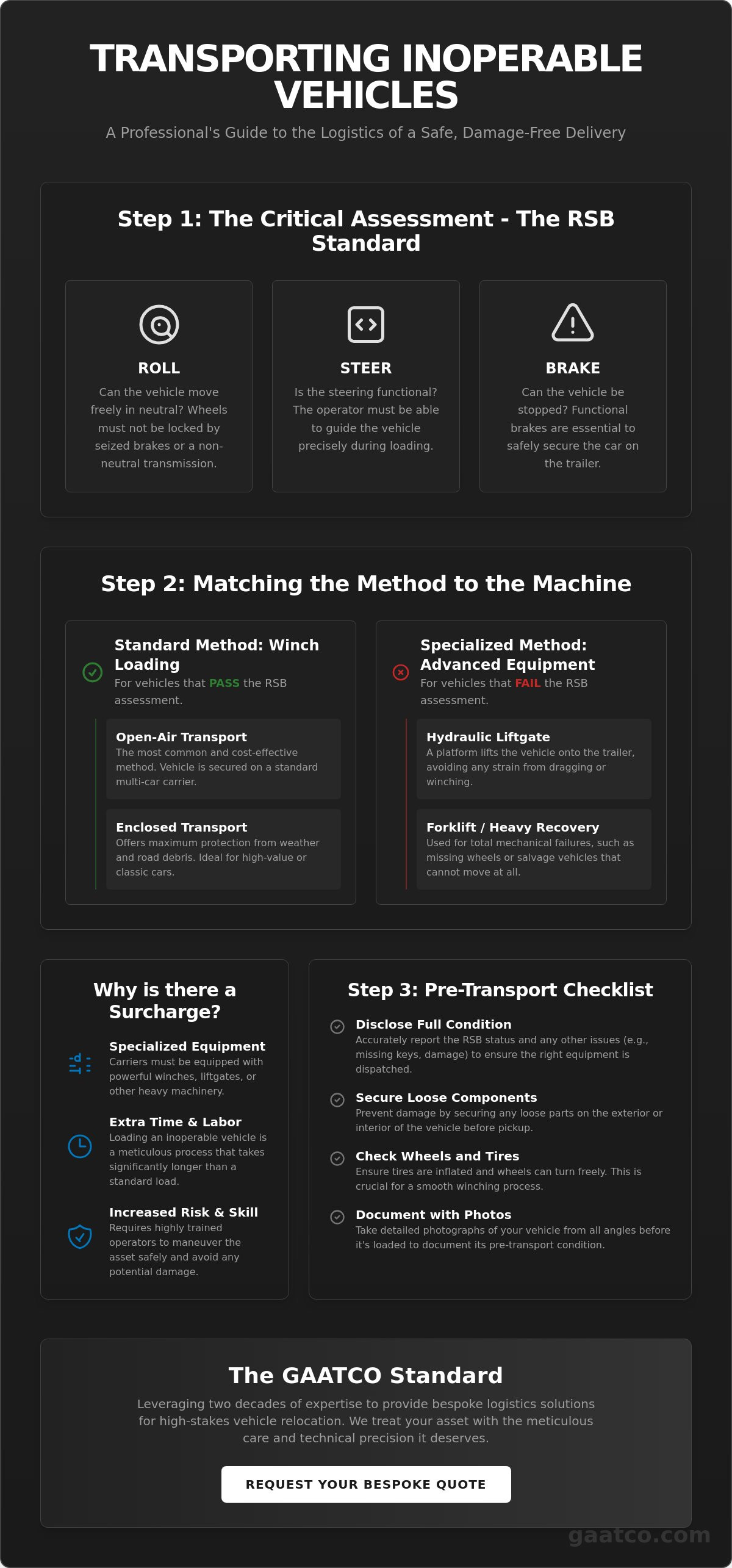
The industry standard for evaluating an inoperable asset is the Roll, Steer, and Brake (RSB) assessment. This three-point check determines if a standard winch-equipped carrier can safely manage the load. "Roll" signifies that the vehicle can move freely in neutral without the resistance of seized calipers or a locked transmission. If a car cannot roll, it essentially becomes a stationary weight that requires specialized intervention. "Steer" implies that the steering rack remains functional, allowing a professional operator to guide the vehicle precisely up the loading ramp. Finally, "Brake" ensures that the vehicle can be safely halted once it reaches its designated position on the trailer. If any of these functions are compromised, the logistics become significantly more complex, often requiring trailers with hydraulic liftgates rather than traditional ramps.
Total Mechanical Failure and Salvage Logistics
When a vehicle suffers from total mechanical failure, such as missing wheels or a locked steering column, standard winching is no longer a viable option. These extreme cases require specialized heavy-duty recovery equipment, including forklifts or specialized dollies, to facilitate movement. Since specialized equipment is not universal across all carriers, identifying the best way to transport a non-running vehicle in this state requires early disclosure. Failure to communicate these details accurately can lead to failed pickup attempts and additional administrative surcharges. We recommend discussing these specifics with a dedicated transport specialist early in the process. Providing detailed photographs and a clear mechanical history allows our team to arrive with the precise equipment necessary for a discreet and efficient recovery. This meticulous attention to detail ensures your asset is handled with the professional respect its value demands.
Professional Transport Methods for Inoperable Vehicles
Once you've established the mechanical status of your asset, selecting the appropriate equipment becomes the next priority. The best way to transport a non-running vehicle is rarely a one-size-fits-all decision; rather, it's a strategic choice between speed, cost, and absolute protection. For short-distance relocations, a flatbed trailer remains the preferred choice. These vehicles provide a stable, level surface that simplifies the loading process. However, for regional or cross-country logistics, the industry relies on more specialized configurations designed to balance efficiency with safety. A professional transport operation utilizes technical precision to overcome the lack of engine power. This involves more than just pulling a car onto a trailer. It requires an understanding of weight distribution and the mechanical stress points of the vehicle's frame.
If you're managing a complex relocation, you can request a quote to see how these specialized methods apply to your specific logistics needs. Our team ensures that every piece of equipment is matched to the unique requirements of your vehicle's condition.
Winch-Equipped Open Carriers
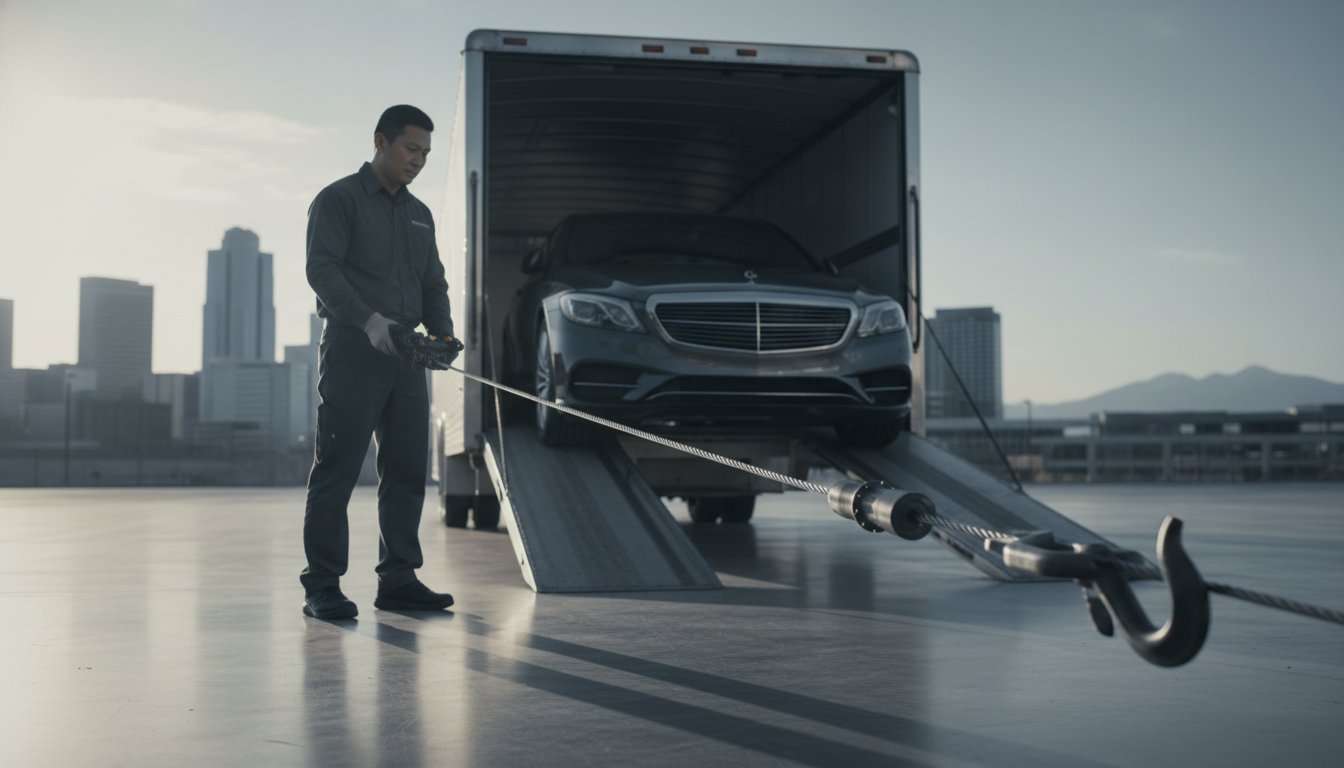
For most project cars, mechanical failures, or standard daily drivers that simply won't start, a winch-equipped open carrier is the most practical solution. The mechanics of the winch allow a single operator to guide the vehicle up the ramps with controlled, steady tension. We utilize soft-strap winching techniques to ensure that no metal-to-metal contact occurs. This approach prevents common damage to the frame, bumper, or suspension components that often occurs with lower-tier towing services. It's an exceptionally cost-effective method for long-distance domestic relocation without sacrificing the safety of the asset. The process is handled with a calm confidence that reflects years of experience in specialized logistics.
Enclosed Transport with Hydraulic Liftgates
High-value non-runners, such as classic restoration shells or luxury vehicles with compromised electronics, demand a premium level of care. Enclosed car transport with hydraulic liftgates represents the pinnacle of safety for inoperable assets. Unlike ramps, which require the vehicle to be pulled up a steep incline, a hydraulic liftgate remains perfectly horizontal. The car is placed on the platform at ground level and lifted vertically into the trailer. This eliminates the risk of bottoming out or shifting during the loading phase. Additionally, this method protects freshly painted surfaces or exposed interiors from road debris and weather. It's a discreet, high-security option for those who prioritize the preservation of their investment above all else. Our team coordinates these inoperable vehicle transport services with the meticulous attention to detail that our clients have come to expect over the decades.
Calculating the Logistics: Cost Factors for Non-Running Cars
Understanding the financial commitment of specialized transport requires a look beyond simple mileage. When you seek the best way to transport a non-running vehicle, you're investing in a precision operation that consumes significant time and technical resources. A carrier doesn't just view an inoperable car as cargo; they view it as a logistical challenge that alters their operational flow. While a functional car is loaded in moments, a non-runner often requires three times the labor and attention. This disparity in effort is why professional logistics providers apply an inoperable surcharge. It's a necessary reflection of the specialized equipment and the meticulous care required to move a static asset without causing mechanical strain.
Why Inoperable Transport Costs More
The primary driver behind increased costs is the scarcity of specialized equipment. Not every carrier in the national network maintains the heavy-duty winches, high-tension cables, and remote systems necessary for safe loading. Industry professionals report that these components require frequent maintenance and certification to ensure they don't fail under load. There's also a significant opportunity cost for the driver. The time spent winching a vehicle onto a trailer is time the carrier isn't moving toward their next destination. It's a common misconception that a non-running car might save money on fuel; in reality, the weight remains the same, and the aerodynamic profile is unchanged. Additionally, the physical risk to the operator is higher when managing thousands of pounds of static weight on a winch line. These factors combined make the inoperable status a major variable in any logistics calculation.
Transparency in Pricing
Achieving a seamless experience requires absolute transparency from both the client and the logistics partner. To avoid unexpected adjustments, you should provide a detailed description of the pickup and delivery terrain. A steep, winding driveway or a narrow residential street can complicate the winching process, potentially requiring a smaller "shuttle" vehicle to bridge the gap between the residence and the main carrier. Disclosing these factors early ensures your quote remains firm and accurate. We recommend that you request a transparent transport quote to receive a bespoke assessment tailored to your vehicle's specific condition and location. This proactive communication eliminates hidden fees and reinforces the trust essential for a high-stakes transport operation. By focusing on these logistical nuances, you ensure that the final delivery is as smooth as the initial consultation. Our team handles these complexities so you can focus on the broader goals of your relocation or restoration project.
A Professional Preparation Checklist for Inoperable Assets
Preparation is the silent partner of successful professional logistics. While a dedicated carrier manages the technical winching and securing of the load, your attention to the vehicle's physical state creates the foundation for a damage-free delivery. Identifying the best way to transport a non-running vehicle involves more than selecting a carrier; it requires meticulous preparation of the asset itself to mitigate mechanical risk. Proper staging ensures that the transition from the ground to the trailer remains a controlled, elegant process rather than a source of stress.
Mechanical Preparation for Loading
The efficiency of the winching process depends heavily on reducing rolling resistance. We recommend inflating tires to their maximum recommended PSI, even if they only hold air for a short duration. If the tires are completely compromised, notify your specialist so they can provide "skates" to facilitate movement. Verifying that the transmission can be disengaged into neutral is a critical safety step; a locked transmission can lead to significant drivetrain strain during loading. For modern vehicles, ensure the battery has sufficient charge to disengage electronic parking brakes or steering locks. Finally, secure any loose components, especially for restoration shells or project cars. Loose trim, bumpers, or interior parts should be fastened or removed to prevent shifting during transit. A clean exterior is also essential, as it allows for a precise and transparent pre-shipment inspection.
Safety and Liability Documentation
Maintaining a detailed record of your vehicle's condition is a hallmark of professional asset management. Before the carrier arrives, take high-resolution photographs from every angle, including the undercarriage if possible. These images serve as an objective baseline for the pre-shipment inspection. When the carrier arrives, ensure the Bill of Lading clearly reflects the non-running status and any specific mechanical limitations you've identified. It's also prudent to verify that the carrier's insurance policy specifically covers maneuvers associated with inoperable loading, which can differ from standard transit coverage. This layer of documentation provides peace of mind and ensures that all parties are aligned on the vehicle's status. By following these steps, you transform a complex mechanical move into a seamless logistical event.
Explore our specialized Inoperable Vehicle Transport services to ensure your asset is handled with the precision and care it deserves.
The GAATCO Standard: Bespoke Solutions for Inoperable Transport
For owners who view their vehicles as significant assets rather than simple machines, the logistical process must reflect that inherent value. Choosing the best way to transport a non-running vehicle is ultimately a decision about who you trust to manage technical complexity on your behalf. GAATCO has spent over two decades refining a standard that prioritizes safety and operational flow above all else. We don't merely move cars. We orchestrate a sophisticated logistics experience that respects the high-stakes nature of specialized transport. Our team serves as a bridge between your specific needs and the complex operational realities of the road, ensuring every detail is handled with a calm, expert touch.
Our curated network consists exclusively of licensed and insured carriers who possess the specialized winching equipment required for damage-free loading. This isn't a generic database; it's a vetted group of professionals who understand the nuances of handling inoperable luxury and classic vehicles. By maintaining these high standards, we eliminate the common fears of damage during the winching process and the frustration of unexpected surcharges. Our door-to-door service ensures that the transition from your residence to our specialized trailers is handled with the discreet efficiency you expect from an elite partner. We take pride in our expansive operational reach, utilizing geographic advantages to provide seamless service across the United States.
Why Sophisticated Owners Choose GAATCO
We approach every shipment as a trusted advisor rather than a simple service provider. This perspective is vital when navigating complex scenarios, such as military PCS moves involving inoperable project cars or high-volume dealer-to-dealer transfers. We understand that reliability is the ultimate luxury in the transport industry. Our collective expertise allows us to anticipate challenges before they arise, ensuring that your vehicle’s mechanical condition is never a barrier to a professional delivery. We remain meticulously attentive to detail, providing a reassuring sense of security for both affluent private collectors and corporate clients alike. Our commitment to core operational values remains a non-negotiable pillar of our business model.
Seamless Execution for Every Shipment
Precision execution begins by matching your vehicle’s specific mechanical state to the most appropriate trailer configuration. Whether your asset requires a winch-equipped open carrier or the horizontal precision of a hydraulic liftgate enclosed unit, we ensure the equipment is fit for the task. Throughout the transit, we provide regular updates and dedicated support so you're always informed about the status of your asset. This commitment to transparent, professional communication is a signature of the GAATCO experience. It's the voice of a seasoned expert handling the heavy lifting so you don't have to. If you're ready to experience a professional logistics partnership, contact us today to discuss your inoperable transport needs.
Securing a Seamless Transition for Your Inoperable Asset
Managing the relocation of a vehicle that cannot move under its own power requires a blend of technical expertise and logistical foresight. You now understand that identifying the best way to transport a non-running vehicle involves an accurate assessment of its roll, steer, and brake status alongside a commitment to meticulous physical preparation. Whether your asset necessitates the precision of a soft-strap winch or the horizontal stability of a hydraulic liftgate, the priority remains the same: a damage-free delivery and a transparent, professional experience. This level of care ensures that your vehicle's mechanical integrity is preserved throughout every mile of the journey.
Our team at GAATCO brings over 20 years of industry expertise to every shipment, utilizing a curated network of fully licensed and insured carriers. We provide the specialized winch and liftgate equipment necessary to handle high-stakes logistics with a calm, understated elegance. You don't have to navigate the complexities of inoperable transport alone. We invite you to Request a Professional Inoperable Transport Quote and allow our seasoned experts to manage your vehicle's journey with the meticulous care it deserves. Your asset is in capable hands, and we look forward to facilitating a successful delivery.
Frequently Asked Questions
Can I ship a car that doesn’t start or drive?
You can certainly ship a vehicle that is not in working condition. Professional carriers categorize these as inoperable assets and utilize specialized loading procedures to facilitate the move. While the process differs from standard transport, it remains a routine operation for a seasoned logistics partner who understands the nuances of moving static weight.
How much extra does it cost to ship a non-running vehicle?
Transporting a non-running vehicle involves an additional surcharge to account for the specialized equipment and increased labor time required during the loading and unloading phases. This fee reflects the technical precision needed to move a static asset safely without the aid of its own engine. It's best to consult with a specialist for a bespoke quote that reflects your specific vehicle's condition and the equipment required.
Do all car shipping companies transport inoperable cars?
Not every carrier is equipped to handle inoperable vehicles. Many standard operators lack the heavy-duty winches or hydraulic systems necessary to load a non-running car onto a trailer safely. Identifying the best way to transport a non-running vehicle involves vetting carriers to ensure they possess the technical infrastructure and specific experience required for this specialized service line.
What equipment is needed to load a car that doesn’t run?
The primary equipment used includes a high-tension winch system and soft-strap cables to guide the vehicle up loading ramps. In more complex scenarios where wheels are seized or missing, operators may use specialized skates or dollies to reduce friction and protect the undercarriage. For high-value assets, a horizontal hydraulic liftgate is the preferred mechanism to eliminate the risks associated with incline loading.
Can a non-running car be shipped on an open trailer?
A non-running car can be shipped on an open trailer provided the carrier is equipped with a functional winch. This is a common and cost-effective method for project cars or vehicles with minor mechanical failures that still possess the ability to roll and steer. The best way to transport a non-running vehicle on an open carrier is to ensure the operator uses professional-grade straps to secure the asset without damaging the frame.
What happens if my car becomes inoperable during the transport process?
If a vehicle becomes inoperable while in transit, the carrier must be notified immediately to adjust the unloading strategy at the destination. This situation may result in a fee adjustment to cover the additional labor and equipment usage required for a safe delivery. Professional logistics providers handle these transitions with a calm focus on safety to ensure the asset reaches its final location without further complication.


