The most expensive mistake in corporate logistics isn't the cost of the transport itself, but the hidden price of a failed delivery or an uninsured claim. You already recognize that securing executive buy-in for high-stakes transit involves more than simply finding the lowest bid. When you're tasked with presenting vehicle transport options to a manager, you're not just comparing quotes; you're acting as a guardian of company assets and a strategist for operational continuity.
We'll show you how to master the art of the data-driven proposal, ensuring your leadership understands why a bespoke approach is a non-negotiable pillar of your strategy. Research from the 2023 Logistics Safety Survey indicates that 15% of shipping delays stem from poor carrier vetting, a metric that can derail even the most carefully planned corporate moves. By the end of this guide, you'll have a professional template and a clear framework to present a risk-mitigated plan that secures immediate executive approval and guarantees the safety of your fleet.
Key Takeaways
- Learn how to pivot the internal conversation from mere shipping expenses to a strategic narrative focused on corporate asset protection and long-term value preservation.
- Master a structured, three-tier framework for presenting vehicle transport options to a manager that addresses specific fleet requirements, volume, and logistical distance.
- Identify the critical distinctions between open and enclosed transport methods to ensure high-value assets are shielded from regional climate risks and complex urban logistics.
- Quantify the true impact of "Drive-it-Yourself" models by accounting for the hidden costs of lost executive productivity and accelerated vehicle depreciation.
- Discover how to recommend bespoke logistics solutions that align with the sophisticated standards and "quiet luxury" required by Fortune 500 operations.
Building the Business Case for Professional Vehicle Relocation
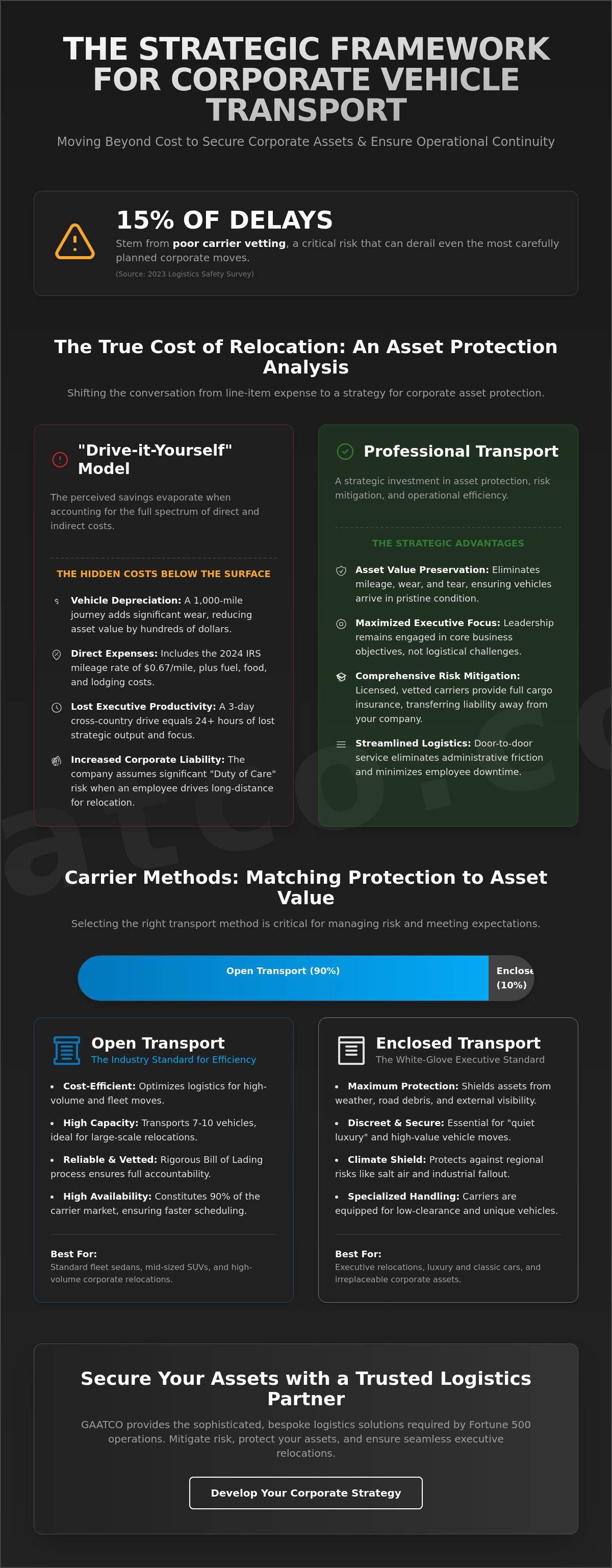
When you're presenting vehicle transport options to a manager, it's vital to shift the conversation from a simple line-item expense to a strategy for corporate asset protection. Viewing relocation through the lens of capital preservation ensures that high-value executive assets remain in pristine condition. A 1,000-mile journey adds significant wear to a vehicle, often depreciating its value by hundreds of dollars before it even reaches its destination. By understanding transport modes and their respective impact on asset longevity, we position professional transport as the only logical choice for maintaining fleet integrity.
The DIY model often appears cost-effective on paper, but the hidden variables tell a different story. Between the 2024 IRS mileage rate of $0.67 per mile, rising fuel costs, and the expense of overnight lodging, the "savings" evaporate quickly. For an executive or senior manager, the real cost is the loss of focus and the physical toll of long-distance travel. To better understand this concept, watch this helpful video:
The ROI of Executive Productivity
We calculate the value of an executive’s time by more than just their salary. A three-day cross-country drive represents 24 hours of lost strategic output. Utilizing seamless logistics management allows your leadership team to remain focused on core business objectives while we handle the complexities of the move. Our door-to-door service eliminates the administrative friction of coordinating drop-offs or rentals, ensuring that employee downtime is virtually non-existent. It's a bespoke approach that respects the high-stakes nature of corporate roles.
Risk Mitigation and Corporate Liability
Duty of Care is a non-negotiable pillar of corporate governance. When an employee drives long-distance for a relocation, the company assumes significant legal liability. Licensed carriers with 20+ years of expertise provide a necessary buffer against these risks. Professional transport includes comprehensive cargo insurance, protecting the company from financial fallout. This level of risk management is a compelling argument when presenting vehicle transport options to a manager who prioritizes safety and professional compliance.
Evaluating Carrier Methods: Open vs. Enclosed for Corporate Assets
When presenting vehicle transport options to a manager, clarity regarding the method of transit is paramount. We recognize that corporate assets represent significant capital investments. Choosing between open and enclosed carriers involves a meticulous assessment of the vehicle's value and the logistical requirements of the move. As of 2024 industry reports, approximately 90% of all professional vehicle relocations utilize open transport, yet the remaining 10% represent high-stakes moves that require a more sophisticated approach.
Open Transport: Efficiency Without Compromise
Open transport remains the industry standard for fleet relocations due to its reliability and cost-efficiency. These multi-car trailers typically accommodate 7 to 10 vehicles, which optimizes the logistical footprint for high-volume moves. For standard fleet sedans or mid-sized SUVs, this method provides a seamless solution. Transparency is maintained through a rigorous Bill of Lading process. This document serves as a definitive record of the vehicle's condition at both origin and destination, ensuring accountability throughout the journey. Managers often prefer this method for its balance of speed and fiscal responsibility.
Enclosed Transport: The White-Glove Executive Standard
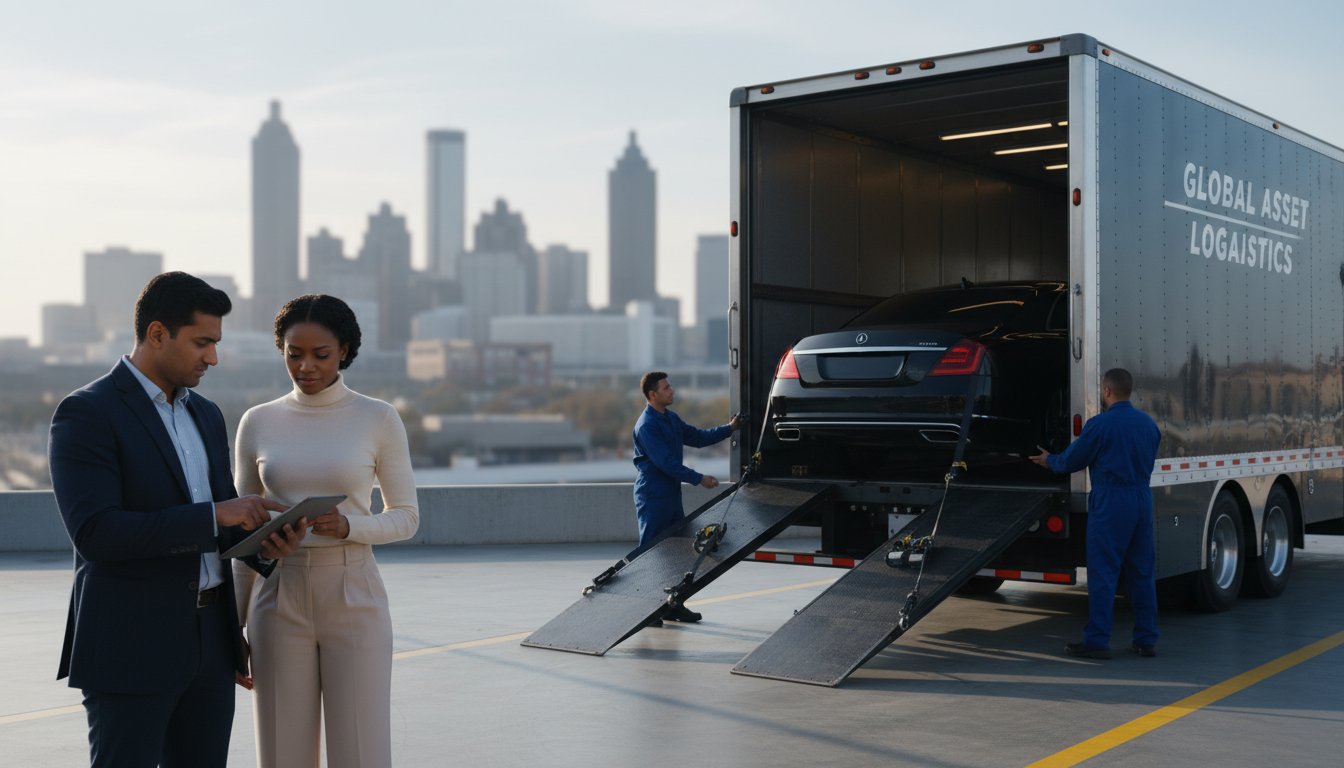
For high-value assets or executive relocations, enclosed transport offers a bespoke level of protection. This method shields vehicles from road debris, inclement weather, and external visibility. It's the preferred choice for regions with volatile climates, such as Seattle or San Francisco, where salt air and frequent rain can impact a vehicle's exterior finish. Enclosed trailers feature specialized hydraulic lift gates to accommodate low-clearance vehicles safely. While the investment is higher, the mitigation of depreciation for luxury models often justifies the premium cost. Our comprehensive logistics services ensure that even the most delicate collections receive this level of care.
Understanding the nuances of Commercial Auto Insurance is essential for quantifying risk during transit. Standard open carriers typically carry cargo insurance limits between $100,000 and $250,000 per load. In contrast, premium enclosed protocols often provide coverage exceeding $500,000 per individual vehicle. This distinction is a critical data point when presenting vehicle transport options to a manager to ensure the organization's liability is fully covered. We recommend evaluating the following factors before finalizing a proposal:
- Vehicle Valuation: Assets valued above $75,000 generally warrant enclosed transit.
- Route Climate: Routes through the "Salt Belt" or coastal regions during winter months increase the risk of corrosion on open trailers.
- Urgency: Open carriers often have more frequent departure dates due to higher volume.
By aligning the transport method with the specific needs of the asset, you demonstrate a commitment to both safety and fiscal precision. This level of detail provides a manager with the confidence needed to approve a logistics plan. For a tailored assessment of your current fleet needs, you may request a detailed logistics quote from our specialized team.
Quantifying Logistics and Liability in Major US Hubs
Successful corporate relocation hinges on the precise mitigation of transit risks. When presenting vehicle transport options to a manager, it is vital to highlight how local expertise prevents costly delays. Standard logistics models often fail in complex urban environments because they do not account for the physical constraints of historic or high-density districts. New York and Boston, for instance, feature narrow residential corridors where a standard 80-foot articulated carrier cannot safely maneuver. In these instances, we facilitate a seamless transfer from a staging area to the final destination using smaller, agile equipment.
Managing the liability of a high-value asset requires an understanding of regional infrastructure. Industry data from 2023 indicates that 72% of transit delays in coastal hubs result from inadequate local route planning. In cities like Seattle and San Diego, secure drop-off points are a necessity due to strict parking ordinances and high-density traffic. Logistics experts in Houston and Dallas report that peak-hour congestion can add up to four hours to a delivery window, necessitating a strategy that prioritizes off-peak movement to maintain efficiency.
Urban Delivery Challenges in Coastal Hubs
Navigating the coastal hubs of the United States requires a bespoke approach to vehicle placement. In Manhattan, strict commercial vehicle restrictions prohibit large carriers from entering specific residential zones. Professional transporters utilize local expertise to coordinate off-site handovers in areas with sufficient clearance. This level of detail ensures that assets remain protected from the hazards of congested metropolitan traffic and low-hanging infrastructure often found in older cities like Boston.
Climate-Specific Protection for Long-Haul Routes
Environmental factors play a critical role in preserving a vehicle's integrity during transit. Routes passing through Las Vegas or Phoenix expose exteriors to temperatures exceeding 110 degrees Fahrenheit, which can compromise specialized paint finishes and delicate interior components. Conversely, winter transport to Denver or Chicago involves exposure to corrosive road salts and moisture that can lead to long-term oxidation.
For these high-stakes transfers, enclosed transport options provide a necessary barrier against the elements. Corporate transfers often require expedited shipping to meet strict executive timelines, such as the 48-hour delivery windows frequently requested for relocations to emerging business hubs like Nashville or Austin. When presenting vehicle transport options to a manager, providing a comprehensive plan that addresses these climate variables demonstrates a commitment to operational excellence. For tailored assistance with your next corporate move, you may request a quote to see how our logistics services manage these complex variables.
Residential areas in Atlanta and Dallas often present additional hurdles, as gated communities frequently restrict vehicles weighing over 26,000 pounds. Our team adapts to these restrictions by employing "last-mile" delivery solutions, ensuring the vehicle reaches the client's doorstep without violating local zoning laws. This proactive coordination is what separates a standard carrier from a dedicated logistics partner.
A Structured Framework for Presenting Options to Executive Leadership
Executive decisions require a blend of precision and foresight. When you are presenting vehicle transport options to a manager, your objective is to provide a comprehensive solution that balances budget with corporate liability. A fragmented approach often leads to delays; therefore, we recommend a four-step framework to ensure clarity and professional alignment.
The first step involves defining the scope with absolute specificity. You must document the volume of the fleet, the exact distance of the transit, and the technical requirements for each vehicle type. Once the scope is established, move to a three-tier option model. This allows leadership to choose the level of service that matches the asset's value:
- Economy: Standard open-carrier transport, which is ideal for high-volume fleet rotations where timelines are flexible.
- Standard: Enhanced open-carrier service featuring dedicated tracking and firm delivery windows.
- Premium: White-glove enclosed transport, the necessary standard for high-value assets and executive-level vehicles.
Effective presentations highlight the risk-adjusted cost rather than just the invoice price. This metric includes the base transport fee, insurance premiums, and the value of executive time saved. According to data from the National Safety Council, motor vehicle crashes cost employers over $56 billion in 2021 alone. Professional logistics mitigate these financial risks. Your final recommendation should be rooted in the company's "Duty of Care," ensuring that the safety of personnel and the security of corporate assets remain non-negotiable pillars of the plan.
Drafting the Comparison Matrix
A visual comparison matrix allows leadership to digest complex logistics at a glance. You should contrast open versus enclosed options while clearly noting the turnaround times for each tier. It is vital to begin requesting accurate quotes at least three weeks before the anticipated move date. This provides the leverage needed to secure expedited options if a critical deadline arises, ensuring a seamless transition for the department.
Addressing Common Manager Objections
Managers frequently ask why an employee cannot simply drive the vehicle to the new destination. You can counter this by presenting data on safety and liability. Professional logistics eliminate the risks associated with long-distance driver fatigue and unnecessary road-wear. When you are presenting vehicle transport options to a manager, justify the premium for enclosed transport by focusing on the protection of C-suite assets from environmental debris and weather. Additionally, emphasize that door-to-door service is superior to terminal-to-terminal logistics. It removes the security risks of leaving a vehicle in an unmonitored lot and provides a more bespoke experience for the end-user.
For a bespoke logistics plan tailored to your corporate requirements, contact our specialists for a formal quote today.
GAATCO: The Sophisticated Solution for Corporate Fleet and Executive Relocation
Managers at Fortune 500 companies require more than a simple shipping service; they demand a logistics partner that understands the high stakes of corporate asset management. GAATCO brings 20 years of expertise to the table, acting as a seasoned advisor when you are presenting vehicle transport options to a manager. We operate with a "Quiet Luxury" philosophy, which means our service is discreet, dependable, and elite. We don't rely on boastful marketing; instead, we let our two decades of safety records and successful executive relocations speak for themselves.
Our commitment to excellence is reflected in our comprehensive operational reach. We handle everything from military POV moves to complex dealer-to-dealer logistics with the same level of professional precision. Every transport is 100% licensed and insured, providing the security that corporate risk management departments require. We prioritize transparent pricing structures to ensure that when you are presenting vehicle transport options to a manager, there are no hidden fees or unexpected surcharges to explain later. It's a level of accountability that builds long-term trust.
Bespoke Solutions for Every Corporate Need
We specialize in tailoring logistics for large-scale fleet relocations across the United States, managing timelines that align with your company's fiscal goals. Our team provides dedicated support for the 1.3 million active-duty military personnel and their families, ensuring their personal vehicles are handled with the respect they deserve. We also possess the technical capability to manage inoperable or specialized vehicles. Whether it is a vintage executive asset or a non-running fleet unit, we use professional-grade equipment to ensure a seamless transition from origin to destination.
Securing Your Professional Transport
Efficiency is the cornerstone of our service model. We have refined our online quote request process to be as intuitive as possible, allowing you to gather necessary data quickly. Our team of experts manages the logistical complexities, customs considerations, and carrier scheduling so you don't have to spend your valuable time on micro-management. We act as the bridge between your corporate requirements and the realities of the transport industry.
Our focus on safety and tailored solutions makes us the preferred choice for high-net-worth individuals and global enterprises alike. We invite you to experience the calm confidence that comes with working with a seasoned industry leader. Partner with GAATCO for your next corporate relocation and ensure your fleet is in the hands of professionals who value discretion as much as you do.
Advancing Your Corporate Relocation Strategy
Successfully presenting vehicle transport options to a manager requires a precise blend of risk mitigation and operational efficiency. You've established a framework for evaluating carrier methods and quantifying liability across major US hubs. This structured approach ensures that executive leadership recognizes the value of protecting corporate assets through professional relocation services. Selecting between open and enclosed transport becomes a calculated decision when backed by strategic foresight and clear data.
GAATCO leverages over 20 years of industry experience to deliver bespoke solutions that meet the exacting standards of modern business. Our network consists exclusively of licensed and insured carriers, providing total peace of mind for every transition. We maintain dedicated support specifically designed for the complexities of corporate and military logistics. By prioritizing safety and excellence, we handle the intricate details of transport so you can focus on your broader organizational goals.
Your journey toward a seamless relocation begins with a partner who understands the nuances of elite service. Request a Professional Quote for Your Corporate Relocation to experience the GAATCO standard of excellence. We're ready to assist you in executing a flawless transition for your team.
Frequently Asked Questions
How do I justify the cost of enclosed transport to my manager?
You justify the cost of enclosed transport by highlighting the preservation of the vehicle’s residual value and the elimination of road debris damage. While open carriers expose assets to weather and particulates, enclosed trailers provide a climate controlled environment that prevents the 3% to 5% depreciation often caused by cosmetic imperfections. This choice ensures the vehicle arrives in showroom condition, which is essential for high value corporate assets managed with a focus on long term quality.
What is the most cost-effective way to ship multiple employee vehicles?
Utilizing a multi car open carrier is the most economical method for transporting several employee vehicles simultaneously. By consolidating 9 to 10 vehicles on a single transport unit, your company reduces the per unit logistics cost by approximately 20% compared to individual shipments. This approach streamlines the administrative process and ensures all executive assets arrive at the new corporate location within the same 24 hour window for maximum efficiency.
How long does it typically take to ship a vehicle from New York to Los Angeles?
Shipping a vehicle from New York to Los Angeles typically requires 7 to 10 days for completion. Federal Motor Carrier Safety Administration (FMCSA) regulations limit drivers to 11 hours of operation per day, which dictates the pace of cross country transit. When presenting vehicle transport options to a manager, you should account for these mandatory rest periods to provide an accurate and professional delivery timeline for the staff.
Is the vehicle insured by the carrier during corporate transport?
Every licensed interstate carrier must maintain a minimum of 750,000 dollars in public liability insurance according to federal requirements. Most premium carriers exceed this, offering cargo insurance coverage ranging from 100,000 to 500,000 dollars per vehicle. We recommend requesting a Certificate of Insurance (COI) that names your corporation as an additional insured party to ensure seamless protection throughout the logistics chain during the entire relocation process.
Can we ship a vehicle that is currently inoperable?
We can ship inoperable vehicles provided the steering and braking systems remain functional for the loading process. These shipments require specialized equipment, such as a power winch or a forklift, to safely secure the asset. Because this process demands additional labor and specific hardware, it's vital to include these details when presenting vehicle transport options to a manager to ensure the logistics budget remains precise and transparent.
What documents does our company need to provide for a vehicle shipment?
Your company must provide a copy of the vehicle registration and a signed Bill of Lading (BOL) at the points of origin and destination. The BOL serves as the official receipt and condition report, documenting the vehicle's state before and after transit. For corporate relocations involving 5 or more vehicles, we also require a signed transport agreement and a valid government issued identification from the designated contact.
How does door-to-door service work in restricted city centers like Chicago or NYC?
Door to door service in restricted urban centers like Chicago or New York City often involves meeting the carrier at a nearby large parking lot. Standard 80 foot transport trailers cannot navigate narrow residential streets or areas with low hanging power lines and 13 foot height clearances. Our logistics team coordinates a specific meeting point within 1 to 2 miles of the destination to ensure a safe and efficient offloading process.
Is there a discount for bulk corporate fleet relocations?
Volume discounts are standard for corporate fleet relocations involving more than 3 vehicles moving along the same route. Many national carriers offer a 5% to 10% reduction in the total service fee when logistics are consolidated into a single contract. This bespoke approach allows your organization to leverage its scale while maintaining the high standards of safety and reliability required for premium executive asset management.


