
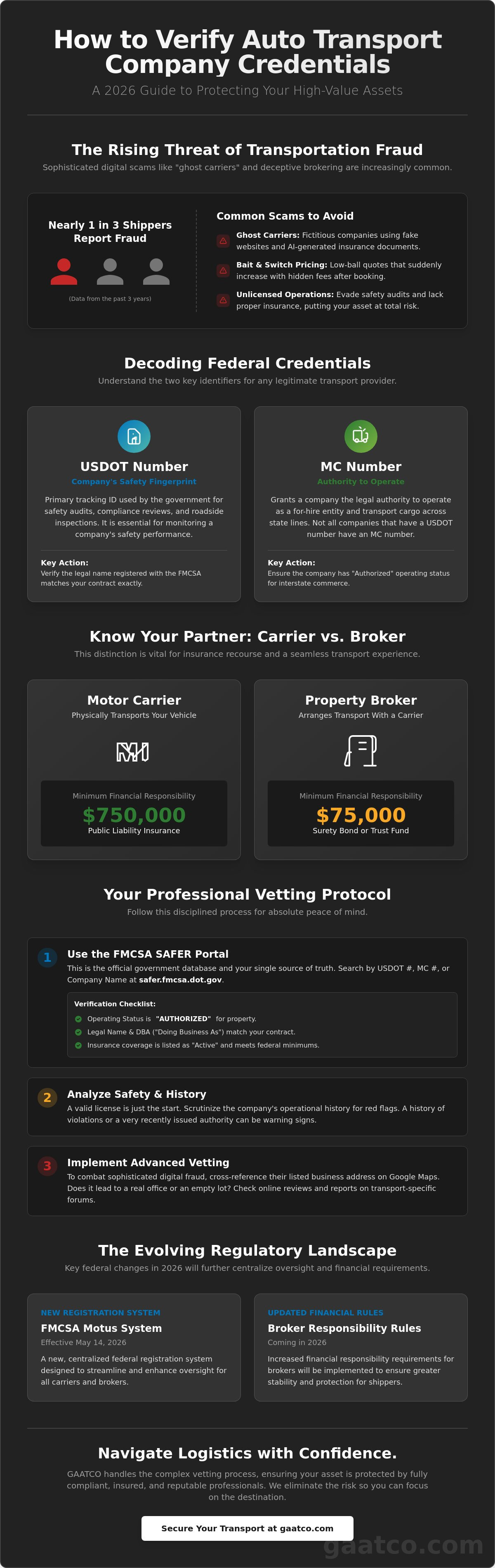
Nearly one in three vehicle shippers reports experiencing transportation fraud within the last three years, often falling victim to sophisticated "ghost carriers" or deceptive double-brokering schemes. For the discerning owner of a high-value asset, knowing how to verify auto transport company license credentials is the most critical step in professional risk management. You recognize that your vehicle demands the highest standards of safety and regulatory oversight. The anxiety of potential damage or the frustration of a "bait and switch" pricing tactic is entirely avoidable when you possess the right technical knowledge.
We've designed this 2026 guide to provide you with the exact protocols needed to validate federal compliance and ensure a seamless shipping experience. You'll learn how to navigate the new FMCSA Motus registration system, understand the implications of the 2026 broker financial responsibility rules, and utilize a professional checklist for vetting every partner. This comprehensive overview ensures you can distinguish a legitimate carrier from a broker with confidence. We act as your trusted advisor, handling these complex logistics so you don't have to compromise on the safety of your transport.
Key Takeaways
- Master the technical nuances of federal credentials by differentiating between USDOT and MC numbers to ensure your logistics provider maintains the requisite operational authority.
- Gain clarity on the distinct legal roles of motor carriers and property brokers, a vital distinction for securing proper insurance recourse and a seamless transport experience.
- Follow a disciplined, professional protocol on how to verify auto transport company license details through the official FMCSA SAFER portal for absolute peace of mind.
- Implement advanced vetting techniques, such as cross-referencing legal documentation with physical business locales, to protect your high-value assets from sophisticated digital fraud.
The Critical Necessity of Auto Transport License Verification
In the sophisticated world of high-value vehicle logistics, the integrity of your chosen partner is the only barrier against significant financial risk. As we move into the second quarter of 2026, the industry faces an influx of increasingly clever digital scams. Recent data indicates that nearly one in three vehicle shippers reports experiencing transportation fraud within the last three years. Understanding how to verify auto transport company license credentials isn't just an administrative task; it's a non-negotiable pillar of asset protection.
The Department of Transportation serves as the primary shield for consumers, ensuring that every motor carrier and broker meets rigorous safety and financial standards. Professional logistics providers, such as the team at GAATCO, operate with a level of transparency that mirrors the meticulous nature of private aviation. With the transition to the new Motus registration system on May 14, 2026, federal oversight has become more centralized. The rise of "ghost carriers" using AI to create convincing fake websites and insurance documents makes this verification more critical than ever. Mastering how to verify auto transport company license status ensures that your chosen partner is federally compliant and financially stable.
To better understand the visual indicators of a legitimate operation, watch this helpful video:
Why 'Cheap' Often Means Unlicensed
Low-ball quotes often signal a lack of proper insurance or a failure to maintain the mandatory $750,000 public liability minimum for carriers. Unlicensed entities frequently evade federal safety audits, which allows them to operate at lower costs by compromising on driver training and equipment maintenance. These entities often vanish after a transaction, leaving owners with damaged assets and zero insurance coverage. An "Authorized" status on the federal registry is a non-negotiable prerequisite for booking any transport service.
The Legal Framework: FMCSA and the DOT
The Federal Motor Carrier Safety Administration (FMCSA) provides the regulatory oversight necessary for all interstate vehicle movements. While a state-level business license proves a company is a registered entity, it doesn't grant the authority to transport cargo across state lines. Interstate commerce requires specific federal active status. This includes maintaining minimum liability insurance and, for brokers, a $75,000 surety bond. Understanding Auto transport broker regulations is essential for discerning whether you're dealing with the physical carrier or an intermediary. This distinction dictates which specific insurance policies protect your vehicle during transit.
Decoding Federal Credentials: USDOT and MC Numbers Explained
Professional vehicle logistics require more than just a truck and a driver. They demand a rigorous adherence to federal oversight. When you begin the process of determining how to verify auto transport company license status, you'll encounter two distinct identifiers: the USDOT number and the MC number. Reputable organizations like GAATCO display these credentials prominently in their digital presence to facilitate transparency. While both numbers are issued by the Department of Transportation, they serve entirely different regulatory purposes within the logistics ecosystem. Understanding this distinction is the first step in protecting your high-value asset.
The USDOT Number: Your Company's Primary Identifier
Think of the USDOT number as a company's safety fingerprint. It's the primary tracking ID used for safety audits, compliance reviews, and roadside inspections. The government uses this identifier to monitor a carrier's safety performance over a multi-year period. It's essential to verify that the legal name registered with the FMCSA's SAFER System matches the name on your contract exactly. While the initial application for a USDOT number is $0, its presence alone doesn't grant the right to move cargo for hire across state lines. It simply identifies the entity within the federal safety database.
The MC Number: Authority to Operate
The MC (Motor Carrier) number represents the specific "Operating Authority" granted to a business. While the USDOT number tracks safety, the MC number confirms that a company has the legal permission to engage in interstate commerce. This authority is mandatory for any transport crossing state boundaries. A company may possess a USDOT number for intrastate operations but lack an active MC number, which would make interstate transport illegal. For those seeking a premium experience, reviewing our bespoke transport solutions provides a clear example of how active authority translates into reliable, compliant service.
Some logistics providers may hold multiple MC numbers if they operate as both a carrier and a broker. Each authority type requires a separate $300 application fee and specific insurance or bonding filings. If a company's MC status is listed as "Dismissed" or "Inactive" on the federal portal, they're legally barred from transporting your vehicle. As the industry transitions to the new Motus registration system in May 2026, these identifiers remain the bedrock of professional accountability. Taking the time to cross-reference these numbers ensures your vehicle remains in the hands of a fully authorized expert who understands the nuances of federal compliance.
Distinguishing Between Carrier and Broker Licensing
A common point of confusion for clients involves the distinction between the entity physically moving the vehicle and the one coordinating the logistics. In the professional logistics landscape, a Motor Carrier is the operator that owns the fleet and employs the drivers. Conversely, a Property Broker is an authorized intermediary that arranges transportation by vetting and selecting the most suitable carrier for a specific route. While some companies hold dual authority to offer a more comprehensive suite of solutions, each role carries specific federal requirements. It's essential to recognize that both entities must be federally compliant, though their financial safeguards vary. Understanding these differences is a vital component of knowing how to verify auto transport company license credentials effectively.
Verification Requirements for Motor Carriers
Operating as the physical custodian of your vehicle, a Motor Carrier must maintain "Active" operating authority for the specific type of freight they handle. For high-value assets, this often involves specialized enclosed equipment. Beyond the $750,000 federal minimum for public liability, a carrier must possess dedicated cargo insurance to protect the vehicle itself during transit. You can review a carrier's safety performance and inspection history through the FMCSA SAFER System. This portal provides a transparency that is vital for managing the risks associated with high-stakes transport, allowing you to see if a carrier has a "Satisfactory" safety rating.
Verification Requirements for Auto Transport Brokers
Strategic coordination is the hallmark of a professional luxury vehicle shipping experience. Brokers do not operate trucks themselves but provide the global network and local expertise needed for complex logistics. Their primary legal requirement is a $75,000 financial security, filed as either a BMC-84 surety bond or a BMC-85 trust fund. A significant regulatory change that took effect on January 16, 2026, mandates that brokers must replenish their bond within seven days if it falls below the minimum, or they face immediate suspension of their authority.
Verifying these details requires a disciplined approach. When you access the federal Licensing & Insurance (L&I) system, you should confirm that the broker's bond is active and that there are no pending cancellations. If a provider doesn't show an active bond, it's a clear signal to look elsewhere. A licensed broker acts as a bridge between your needs and the complex operational realities of the road, ensuring every carrier they hire meets the same elite standards of safety and reliability that we demand for our clients.
Step-by-Step Guide to the SAFER System Verification
Executing a thorough background check requires a disciplined approach to the official federal databases. Learning how to verify auto transport company license status involves navigating the Safety and Fitness Electronic Records (SAFER) System. This public-facing portal remains the gold standard for preliminary due diligence in 2026. While the backend registration systems have transitioned to the Motus platform, the SAFER portal continues to provide the essential transparency required for high-stakes vehicle logistics. It's the primary tool used by professionals to ensure a partner's credentials are both current and comprehensive.
Begin by entering the USDOT or MC number provided during your initial consultation. Once the company snapshot appears, verify the 'Entity Type' immediately. It must align with the service model the provider claims; a carrier should be listed as such, while a broker must show property broker authority. The most critical field is 'Operating Status.' This must read 'Authorized' or 'Active.' Any other designation indicates a lapse in legal authority that should terminate the engagement. You should also review the 'Inspections' and 'Crashes' data for a high-level safety overview. While minor incidents may occur over years of operation, a pattern of out-of-service violations suggests a lack of the meticulous maintenance we prioritize.
Interpreting the Insurance and Bond Details
The snapshot alone isn't sufficient for a complete verification. You must click the 'Licensing & Insurance' link within the SAFER snapshot to view the specific policies on file. Confirm that 'Active' insurance is present for the specific type of authority being exercised. Pay close attention to 'Pending' cancellations. These are significant red flags suggesting the company may lose its authority within days due to non-payment or high-risk claims. For brokers, ensure the $75,000 bond is active, keeping in mind the 2026 requirement that any bond deficiency must be corrected within seven days to avoid suspension.
The MCS-150 Update Date
The MCS-150 form is the biennial update carriers must file to keep their fleet, safety, and mileage data current with the Department of Transportation. If the snapshot displays an 'MCS-150 Out of Date' warning, it reflects poor administrative oversight and a potential lapse in federal compliance. Professional organizations maintain rigorous compliance schedules to ensure seamless service. We ensure every detail of our premium transport logistics is updated and verified well ahead of federal deadlines to maintain our standing as a trusted advisor in the field.
Final Due Diligence: Beyond the Federal License
Once you've mastered the technical steps of how to verify auto transport company license credentials, you must apply a final layer of scrutiny to ensure total asset protection. A common tactic among less reputable operators is the use of slightly varied names to bypass safety records. You should ensure the legal name listed on the federal portal matches the name on your contract and insurance certificate exactly. Discrepancies in these documents often signal a lack of professional oversight. Verification of a physical business address is equally vital. Avoid companies that operate solely through P.O. boxes, as a tangible headquarters reflects a commitment to long-term stability and accountability. For those seeking absolute clarity, consulting with the professionals at GAATCO for a transparent, bespoke quote provides a standard of service that reflects the high-stakes nature of luxury transport.
Requesting a Certificate of Insurance (COI) is a standard practice in professional logistics. This document should ideally name you or your vehicle specifically, providing a direct link between the carrier's policy and your asset. This step eliminates the ambiguity often found in generic insurance summaries and ensures that the coverage limits are sufficient for your vehicle's value. It's a hallmark of a transparent partnership and provides the reassurance that your high-value asset is protected by more than just a verbal promise.
Red Flags in the Verification Process
Identifying specific warnings early can prevent a logistical catastrophe. A status of "Not Authorized" or "Inactive" is the most obvious deterrent, but frequent name changes or "Doing Business As" (DBA) filings can be used to mask a history of safety violations. Be particularly cautious of companies whose USDOT numbers were registered less than six months ago. These are often "burn" authorities designed to be discarded once negative reports or insurance claims accumulate. Any provider who refuses to provide their MC number upon request isn't a partner you can trust with your vehicle.
The Value of Long-Term Industry Experience
Reliability in the logistics sector is often a product of time. A high "Years in Business" count on the federal portal correlates with a proven track record of navigating complex regulatory environments and maintaining safety standards. Our 20-year legacy in specialized transport serves as a benchmark for established, elite service. This longevity demonstrates a consistent ability to handle the nuances of classic and premium vehicle shipping while maintaining rigorous compliance. The peace of mind that comes from a fully verified, professional partnership allows you to focus on your destination while we handle the complexities of the road.
Securing Your Vehicle's Legacy Through Professional Oversight
Moving a high-value asset begins with a commitment to technical transparency. You now possess the specialized knowledge of how to verify auto transport company license credentials, from interpreting the nuances of the SAFER system to distinguishing between the roles of carriers and brokers. This professional vetting process is the most effective safeguard against the rising sophistication of digital fraud in the 2026 transport sector. By prioritizing active federal authority and comprehensive insurance documentation, you ensure your vehicle remains in the hands of a partner who respects the stakes involved.
GAATCO brings over 20 years of licensed and insured expertise to every engagement, specializing in the complex logistics required for luxury and classic vehicles. We maintain a culture of absolute transparency, providing clear federal credentialing for every shipment we manage. It's a disciplined approach that eliminates the anxiety of the unknown and replaces it with the quiet confidence of a bespoke partnership. When you're ready to experience a seamless transport solution, we invite you to Request a Bespoke Transport Quote from GAATCO. Your vehicle's safety is our non-negotiable priority, and we look forward to providing the elite service your asset deserves.
Frequently Asked Questions
How do I check if an auto transport company is licensed?
You check a company's licensing status by accessing the official FMCSA Safety and Fitness Electronic Records (SAFER) System website. By entering the provider's unique USDOT or MC number, you can view their current operating status in real time. It's essential that the record indicates an "Authorized" or "Active" designation. This disciplined approach is the cornerstone of knowing how to verify auto transport company license credentials before committing to a logistics contract.
What is a USDOT number and why is it important for car shipping?
A USDOT number serves as a unique federal identifier for monitoring a company's safety performance, including audits and roadside inspections. It's the primary tracking mechanism used by the Department of Transportation to ensure carriers adhere to safety regulations. For clients, it provides a transparent history of a company's operational integrity. This identifier allows you to cross-reference legal names and safety data to confirm you're partnering with a compliant professional.
Can a broker ship my car if they don't have a carrier license?
Yes, a broker may legally arrange the transport of your vehicle provided they possess active Property Broker authority. While they don't operate trucks themselves, they must maintain a $75,000 surety bond or trust fund to protect shippers. In 2026, regulations mandate that brokers replenish this bond within seven days of any deficiency. Brokers serve as vital intermediaries, utilizing their global networks to secure the most appropriate carrier for your bespoke logistics needs.
What happens if I use an unlicensed auto transport company?
Utilizing an unlicensed company exposes you to significant financial and legal risks, including a total lack of insurance recourse in the event of damage. Unlicensed entities, often referred to as "ghost carriers," operate outside federal safety oversight and may disappear after taking a deposit. Without active federal authority, you have no government protection against fraud or vehicle theft. This lack of accountability can turn a luxury transport into a costly logistical failure.
How do I verify a transport company's insurance coverage?
You verify insurance by clicking the "Licensing & Insurance" link within the company's SAFER snapshot on the FMCSA website. This section details the specific liability and cargo policies currently on file with the federal government. For absolute certainty, you should request a Certificate of Insurance (COI) directly from the provider. A professional company will provide a document that names your vehicle specifically, ensuring the coverage limits are sufficient for your high-value asset.
Is an MC number the same as a business license?
No, an MC number is not a general business license; it is specific federal "Operating Authority" required for interstate commerce. While a state business license proves a company is a registered legal entity, it doesn't grant the right to transport freight across state lines for hire. The MC number confirms that the business has met the mandatory insurance and bonding requirements set by the FMCSA. It's a critical distinction for anyone learning how to verify auto transport company license status.
How often should I re-verify a carrier's license before my car is picked up?
We recommend verifying a carrier's status at the time of booking and again 24 to 48 hours before your vehicle is scheduled for pickup. Licensing and insurance status can change rapidly due to administrative lapses or policy cancellations. A final check ensures that the carrier's authority remains "Active" and that no "Pending" cancellations have appeared on their record. This level of meticulous attention to detail is a hallmark of a secure, professional transport experience.
Where can I find a company's safety rating?
You can find a company's safety rating on their FMCSA Company Snapshot within the SAFER system. The rating will typically be listed as "Satisfactory," "Conditional," or "Unrated." A "Satisfactory" rating indicates that the carrier has passed a comprehensive safety audit and meets all federal standards. If a company is "Unrated," it may simply mean they haven't yet undergone a full audit, which is common for newer entities with clean inspection histories.


