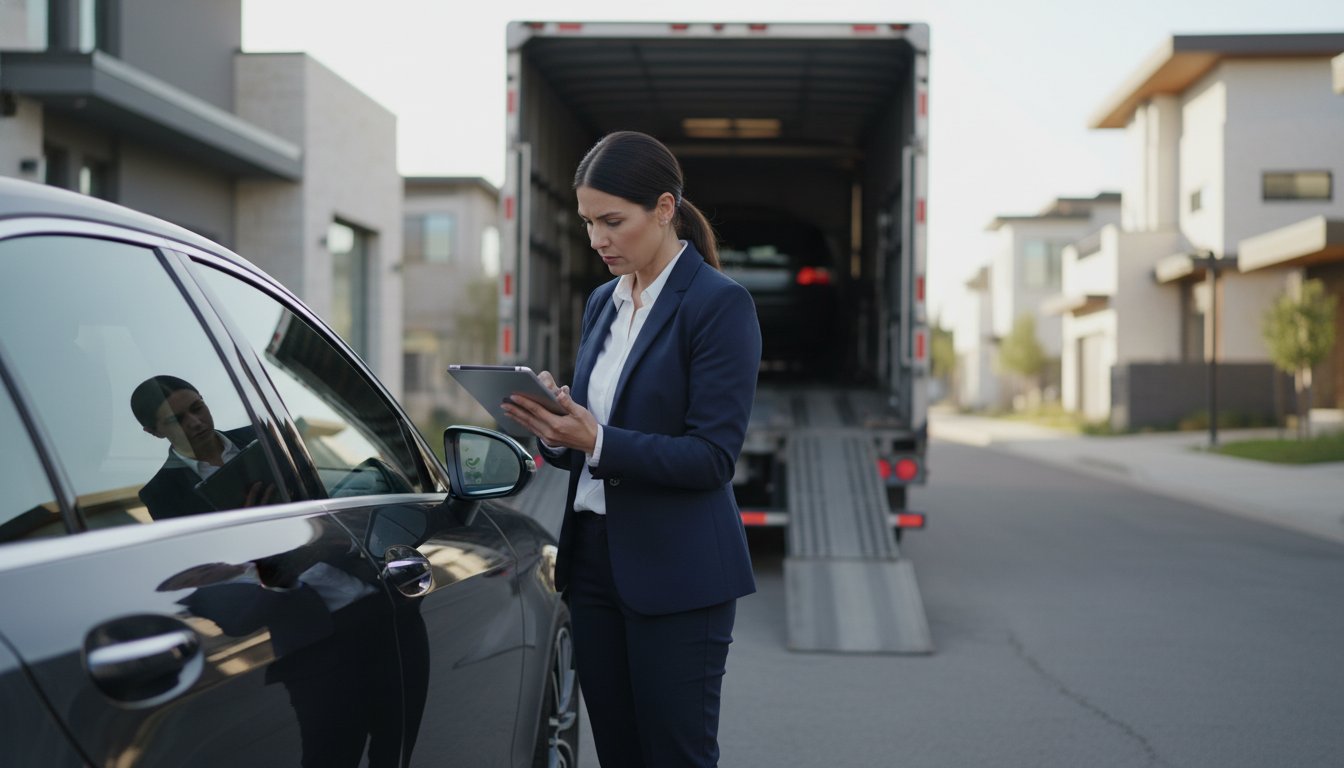
The moment of vehicle arrival is not merely the conclusion of a logistical journey; it is a critical legal window where your signature carries the weight of a final verdict. We understand the subtle pressure that often accompanies a delivery, particularly when a driver is eager to depart or the environmental lighting is less than ideal. It is common to feel a sense of urgency to conclude the transaction, yet this specific moment requires your most meticulous and disciplined attention to detail.
Mastering how to inspect your car after transport delivery with professional precision ensures that your investment remains protected and any discrepancies are legally documented on the Bill of Lading. This protocol provides the clarity you need to verify your vehicle’s condition with total confidence, regardless of external pressures. We will guide you through a sophisticated step-by-step process to identify subtle damage, navigate the 2026 shift toward electronic driver vehicle inspection reports, and secure the peace of mind that defines a truly successful transport experience.
Key Takeaways
- Understand why the delivery window represents your sole legal opportunity to document discrepancies before the Bill of Lading becomes a binding record of condition.
- Learn how to apply the systematic "Zone Method" to ensure a comprehensive 360-degree exterior evaluation that identifies transit-specific issues.
- Discover the professional protocol for how to inspect your car after transport delivery by verifying odometer readings and assessing acoustic signatures upon the initial startup.
- Master the use of precise industry terminology to document findings, ensuring that any scuffs or mechanical irregularities are clearly articulated for claims processing.
- Recognize the critical 24-hour timeline for initiating notifications to ensure your investment remains protected under professional transport standards.
The Professional Handover: Why Post-Delivery Inspection is Non-Negotiable
The arrival of your vehicle represents the successful conclusion of a specialized transit operation, yet the handover phase is much more than a simple exchange of keys. It serves as your primary legal window to document the vehicle's condition and maintain the integrity of the insurance chain of custody. Professionalism at this stage requires a specific mindset; you aren't merely being polite, you're acting as a diligent steward of your high-value investment. Our team views this final step as a partnership in precision. Understanding how to inspect your car after transport delivery effectively involves recognizing that transit damage, unlike standard wear and tear, requires immediate documentation to remain eligible for coverage.
To better understand the visual nuances of this process, watch this helpful video detailing a professional inspection protocol:
Managing the Handover Environment
Establishing a professional boundary with the driver immediately upon arrival is essential. While a driver may feel pressured by a tight schedule or upcoming appointments, your priority is the safety and accuracy of the delivery. Request that the vehicle be unloaded in a well-lit, spacious area where you have 360-degree access. If a driver seems hurried, a calm and authoritative response is best: "I appreciate your schedule, but I must complete my protocol to ensure the documentation is accurate for both of us." This approach sets a tone of mutual respect and signals that you're a seasoned client who understands the nuances of professional transport services.
The Role of the Bill of Lading (BoL)
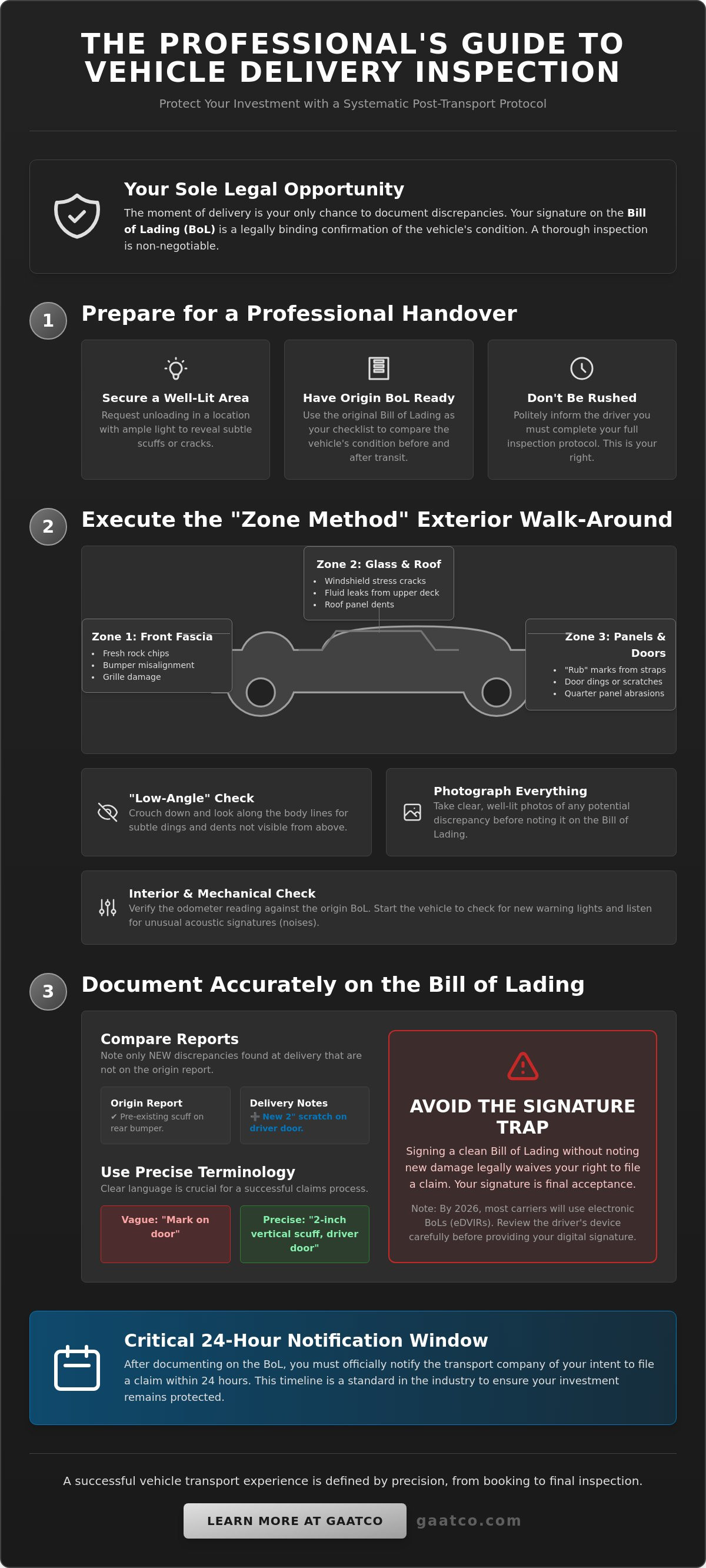
The Bill of Lading (BoL) is the most critical document in the entire logistics process. It functions as a legal receipt and a definitive record of the vehicle's state at both origin and destination. When you learn how to inspect your car after transport delivery, you must treat the BoL as a living record. Compare the delivery notes directly against the origin report to identify any new discrepancies. The "Signature Trap" occurs when a client signs a clean BoL without a thorough inspection. By doing so, you're legally acknowledging that the vehicle arrived in perfect condition, effectively waiving your right to future claims. Under 2026 FMCSA standards, many carriers have transitioned to electronic records, making it even more important to review the digital summary on the driver's device before providing your final authorization.
The Systematic Exterior Walk-Around: A Point-by-Point Protocol
To execute a professional-grade evaluation, one must move beyond a cursory glance. Adopting a structured protocol is the only way to ensure no detail is overlooked. When considering how to inspect your car after transport delivery, we recommend the "Zone Method," a hierarchical approach that segments the vehicle into high-priority areas. This method is particularly vital for the 95% of automobiles shipped via open transport carriers, where exposure to the elements is a standard operational reality. A systematic walk-around ensures that you're not just looking at the car, but truly seeing its condition.
The Zone Inspection Method
- Zone 1: The Front Fascia. Focus on the leading edges of the hood and the front bumper. You're looking for fresh rock chips or any misalignment in the bumper assembly that may have occurred during the high-stakes loading and unloading process.
- Zone 2: The Glass and Roof. Examine all glass surfaces for stress cracks. For vehicles positioned on the lower deck of an open carrier, inspect the roof specifically for fluid leaks, such as oil or brake fluid, originating from vehicles positioned on the upper deck.
- Zone 3: The Quarter Panels and Doors. Search for "rub" marks or abrasions. These often occur if tie-down straps were improperly secured or if there was excessive lateral movement during transit.
The "Low-Angle" check is equally critical. Use a kneeling position to inspect the lower bumpers and the undercarriage. These areas are prone to "bottoming out" on loading ramps, especially for low-profile luxury or classic cars. If you identify any discrepancy, document it immediately with high-resolution, date-stamped photography from multiple angles. Following official consumer protection guidelines ensures your documentation meets the necessary evidentiary standards for a claim. For those seeking the highest level of protection from such environmental variables, enclosed car transport remains the preferred choice for discerning collectors.
Inspecting Under Adverse Conditions
Delivery logistics don't always align with perfect daylight. If your vehicle arrives at dusk or after dark, utilize a high-lumen tactical flashlight rather than a standard smartphone light. The focused beam will reveal paint imperfections and dents that ambient light might mask. When a vehicle is wet or covered in road film, rely on a tactile inspection. Running your hand along the panels can often detect a dent that the eye cannot see through the dirt or water. In cases where the vehicle's cleanliness prevents a definitive assessment, you should write "Vehicle received dirty, subject to further inspection for hidden damage" on the Bill of Lading. This professional caveat preserves your rights while acknowledging the current environmental limitations.
Beyond the Surface: Interior and Mechanical Verification
While the exterior walk-around is essential, a truly professional protocol extends into the cabin and under the hood. Understanding how to inspect your car after transport delivery requires a deep dive into the vehicle's operational status. Begin by comparing the current odometer reading against the origin report. While minor mileage is expected for loading and unloading, any significant discrepancy must be questioned immediately. Once inside, start the engine and listen for new acoustic signatures. Unusual rattles, suspension squeaks, or exhaust heat shield vibrations that weren't present at pickup could indicate shifting during transit or improper handling. This step is particularly critical for those who have invested in Classic Car Transport where mechanical nuances are paramount.
Modern luxury vehicles rely on sophisticated electronic systems and safety sensors that can be sensitive to the vibrations of a long-haul journey. Verify that the navigation, camera arrays, infotainment displays, and proximity sensors remain perfectly calibrated and responsive. According to a comprehensive guide to shipping a car, ensuring these systems function correctly is as vital as checking for paint chips. Additionally, perform a brief fluid level and leakage check. Transit involves constant vibration and pressure changes; identifying a fresh leak early prevents long-term mechanical degradation that might otherwise go unnoticed until your next scheduled service.
Interior Integrity and Personal Property
The interior of a high-end vehicle is a sanctuary of fine materials that requires its own dedicated scrutiny. Inspect the seat bolsters and headliners for new stains, abrasions, or "transfer" marks from the driver's clothing. Confirm that all accessories, spare keys, and manuals are present. If your vehicle was transported via an open carrier through inclement weather, check for hidden moisture under the floor mats or in the trunk. Water ingress can occur during severe storms, and early detection is key to preventing mildew or electrical corrosion in the future. We recommend a meticulous check of all storage compartments to ensure the cabin remains in its pristine, pre-transit state.
Mechanical and Undercarriage Safety
Before the driver departs, perform a basic functional test to ensure the vehicle is road-ready. Press the brake pedal and turn the steering wheel to ensure the feel is consistent with your pre-shipment experience. Inspect the tires specifically for sidewall damage; transit chocks or heavy-duty straps can occasionally cause bulging or scuffing if over-tightened. For vehicles equipped with advanced air suspension systems, verify that the vehicle raises and lowers through all modes without hesitation. This level of scrutiny is what separates a casual owner from a sophisticated collector who values operational excellence and long-term vehicle health.
Documenting Discrepancies: Protecting Your Investment
Documenting any discrepancies is the most critical phase of the professional protocol. If a mark or mechanical issue isn't noted on the Bill of Lading, the law generally assumes it didn't occur during transit. This document serves as the final word in the chain of custody. When you're learning how to inspect your car after transport delivery, you must adopt a mindset of clinical precision. Use sophisticated industry terminology to describe your findings. For instance, distinguish between a "scuff," which is a surface-level abrasion, and a "gouge," which indicates a deeper penetration of the paint or bodywork. Clear, technical language prevents the carrier's insurance adjusters from downplaying the severity of the claim.
Always capture what we call the "Context Shot." These are high-resolution photographs that display the damage in the same frame as the transport trailer or the driver's truck. This visual evidence provides an undeniable link between the vehicle's condition and the delivery event. Once your notations are complete, ensure the driver signs the document to acknowledge every specific entry. This signature is the final seal on your evidence, transforming your observations into an agreed-upon legal record. If you require a partner that prioritizes this level of transparency, you may request a quote for our specialized transport services.
How to Note Damage Correctively
Avoid vague descriptions like "scratch on side." Instead, be exacting: "Three-inch vertical scratch on the lower portion of the passenger-side rear door." If you're using traditional carbon-less forms, press firmly to ensure your notations are legible on all copies. In our modern operational environment, many drivers utilize digital devices. Before tapping the final approval, review the screen to ensure your comments were entered exactly as intended. We recommend photographing the final signed document immediately, providing you with an instant digital backup before the driver leaves the premises.
The Photo Documentation Standard
A professional standard requires more than a few casual snapshots. We suggest capturing 10 to 15 high-resolution images from multiple angles. Start with the "VIN Match" by including the vehicle's VIN plate in your first photo; this anchors the entire sequence to your specific car. Follow this with a slow, 4K video walk-around of the entire vehicle. A video provides a continuous narrative of the car's state, making it the ultimate backup should a dispute arise regarding the timing or location of a specific blemish. This level of detail ensures that your investment remains protected by a wall of empirical evidence.
Resolution and Next Steps: The GAATCO Commitment
The protocol for how to inspect your car after transport delivery culminates in the resolution phase. If a discrepancy is identified, immediate action is mandatory. While federal rules allow for various reporting windows, most transport contracts require damage reports within 24 to 48 hours. We advise initiating contact with our dispatch and claims departments within the first 24 hours to ensure the highest priority. This swift communication preserves your legal standing and allows our team to provide the secondary oversight that distinguishes a premium partner from a standard service provider.
While the carrier's cargo insurance is the primary source of coverage for transit-related issues, we act as your dedicated advocate throughout the mediation. Federal regulations grant carriers up to 30 days to acknowledge a claim and up to 120 days to offer a settlement or denial. During this period, maintaining a professional and measured stance is essential for a successful outcome. Our role is to bridge the gap between complex operational realities and your need for a seamless resolution, ensuring that the high standards of our specialized industry are upheld at every turn.
Initiating a Professional Claim
Compiling a comprehensive "Evidence Package" is your first step toward a successful resolution. This package should include the signed Bill of Lading with clear notations, the original inspection report from the origin, and your high-resolution photo or video documentation. We recommend securing repair estimates exclusively from authorized luxury service centers or specialized workshops that understand the intricacies of high-end automotive engineering. Utilizing our specialized transport services significantly reduces the likelihood of these occurrences, as our operational flow is designed to prioritize the safety of every asset in our care.
Conclusion: The Peace of Mind Standard
Mastering the protocol for how to inspect your car after transport delivery is the final pillar of a sophisticated logistics strategy. By treating the handover with the same level of seriousness as the initial booking, you secure your investment and ensure the delivery meets your exacting standards. We remain dedicated to providing the reliability and discretion required for safe vehicle relocation across our expansive operational reach. Each member of our team understands that we're moving more than just a vehicle; we're protecting a significant asset and your peace of mind. When you're ready for your next transport, we invite you to request a professional quote today and experience the calm confidence of a truly elite service.
Your Protocol for Long-Term Asset Protection
A disciplined approach to the final handover ensures your vehicle's journey concludes with the same precision it began. By implementing these expert steps on how to inspect your car after transport delivery, you transform a routine arrival into a robust legal safeguard for your investment. The combination of systematic visual checks and immediate documentation on the Bill of Lading remains the gold standard for protecting high-value automotive assets. This meticulous attention to detail is what defines a sophisticated owner and ensures that the integrity of the vehicle remains uncompromised.
With over 20 years of industry-leading expertise, our team provides the sophisticated oversight required for complex logistics. We operate a fully licensed and insured carrier network that specializes in the delicate handling of luxury and classic vehicles. This established experience allows us to manage every detail with a level of care that reflects the expectations of our most discerning clients. If you're preparing for a new relocation, we invite you to Request a Professional Auto Transport Quote. Trust in a partner that values your peace of mind as much as the vehicles we transport. We're ready to assist with your next successful delivery.
Frequently Asked Questions
What should I do if my car is delivered at night?
Night deliveries require specialized lighting to ensure accuracy. If a vehicle arrives after sunset, move it to a well-lit area such as a garage or a brightly illuminated parking lot. Use a high-lumen tactical flashlight to reveal paint imperfections that standard smartphone lights might miss. If visibility remains insufficient, ensure you note "delivered at night, subject to further inspection" on the Bill of Lading to preserve your rights.
Can I refuse delivery if the car is damaged?
You should generally not refuse delivery even if damage is present. Refusal often leads to the vehicle being placed in a third-party storage facility, which complicates the claims process and adds unnecessary costs. Instead, accept the vehicle and meticulously document every discrepancy on the Bill of Lading. This documentation is your primary legal protection and the foundation for any subsequent insurance claim through the carrier.
What happens if I find damage after the driver has already left?
Discovering damage after the driver has departed significantly complicates the recovery process. Since the Bill of Lading was signed "clean," the burden of proof shifts entirely to you. You must contact the transport provider immediately, ideally within 24 hours, and provide date-stamped photos from the delivery moment. While challenging, some claims can still proceed if the evidence clearly shows the damage occurred during transit.
Should I wash my car before inspecting it if it arrives dirty?
Don't wash the vehicle until the initial inspection is complete and the Bill of Lading is signed. Washing can inadvertently remove evidence or mask subtle paint abrasions. If the car arrives with significant road film, perform a tactile inspection by feeling for dents along the panels. Once the handover is documented, a thorough wash may reveal hidden issues, which you should report to the provider immediately as "hidden damage."
Does the Bill of Lading need to be a physical paper copy?
Digital documentation has become the industry standard as of 2026. Electronic Driver Vehicle Inspection Reports carry the same legal weight as traditional paper copies. When learning how to inspect your car after transport delivery, ensure you review the digital summary on the driver's device before providing a signature. Request an immediate copy of the final PDF via email or take a clear photograph of the driver's screen for your records.
What is the most common type of transport damage to look for?
The most frequent transit-related issues include rock chips, surface scuffs from tie-down straps, and undercarriage scrapes. Open carriers expose vehicles to road debris, while improper tensioning can lead to paint abrasions. Always prioritize the front fascia and lower bumpers during your evaluation. Understanding how to inspect your car after transport delivery involves focusing on these high-risk areas where vehicles shipped via open transport are most vulnerable.
How long does a typical professional inspection take?
A professional-grade inspection typically requires 15 to 30 minutes of focused attention. This timeframe allows for a systematic 360-degree walk-around, a brief interior check, and the documentation of the odometer and fluid levels. While a driver might appear hurried, taking this time is essential to maintain the integrity of your investment. It ensures that every detail is captured before the legal chain of custody concludes and the driver departs.
Are mechanical issues covered by transport insurance?
Mechanical issues are only covered if they're a direct result of carrier negligence or transit-related incidents. Standard mechanical failures, such as a battery dying or an older part failing, are typically excluded. However, if a vehicle was mishandled during loading or suffered an impact that damaged the suspension or drivetrain, the carrier's cargo insurance should apply. Always verify fluid levels and acoustic signatures upon the first startup to identify new irregularities.


